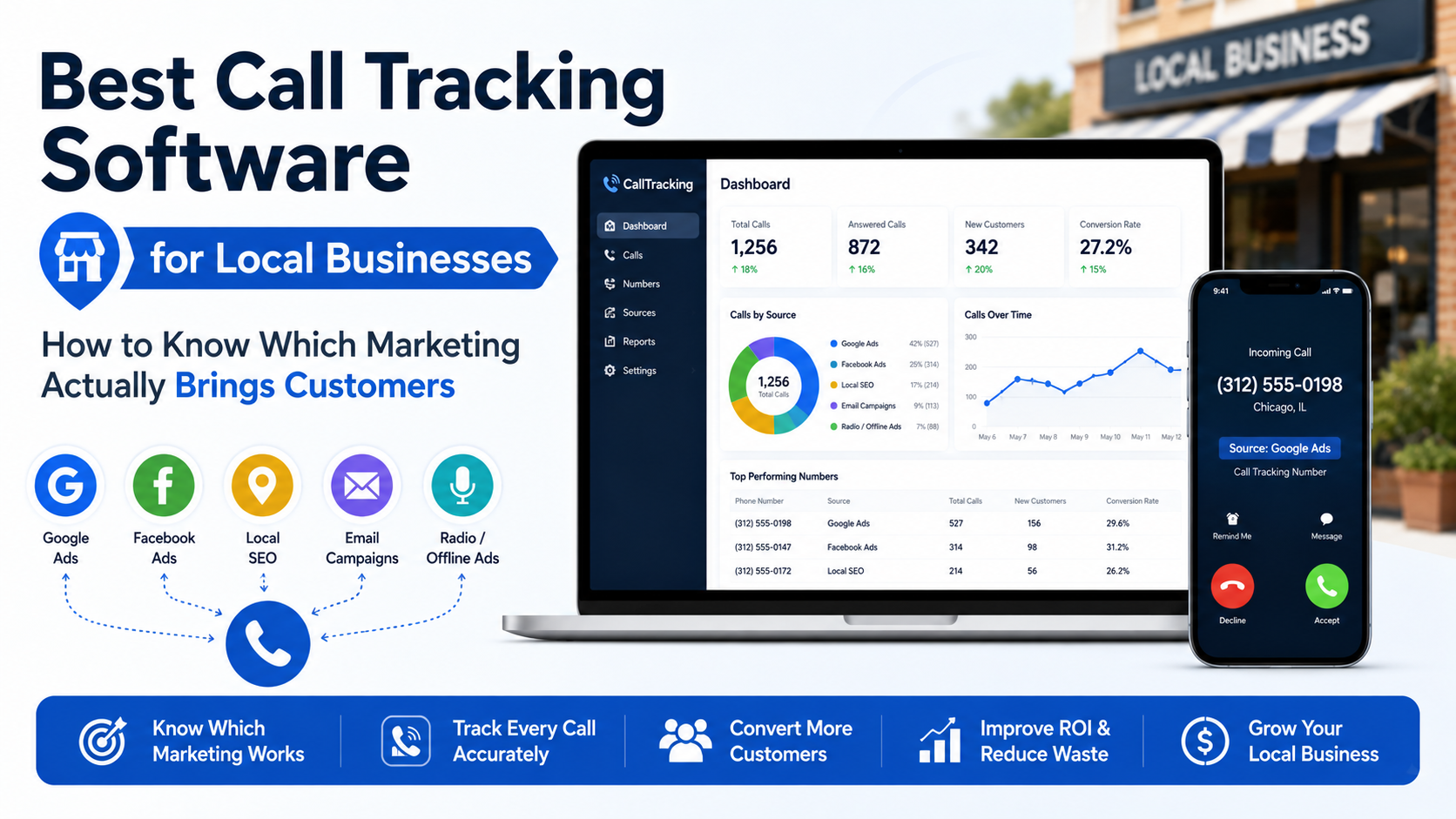
A few years ago, I worked with a local service business that was spending money on multiple marketing channels.
They had:
- Google Ads running
- Facebook campaigns active
- SEO work in progress
- Flyers being distributed locally
Every month, the owner asked the same question:
“Which marketing effort is actually bringing customers?”
The frustrating part was that they knew the phone was ringing.
They just did not know why.
A customer might say:
“I found you online.”
But that answer does not tell you much.
Did they find the business through Google Search?
A paid advertisement?
A local directory?
A social media post?
Without proper tracking, businesses often make decisions based on assumptions.
I have seen companies pause campaigns that were generating valuable calls simply because they could not measure the results.
That is where call tracking software becomes useful.
Call tracking gives businesses visibility into where phone leads come from, which campaigns perform better, and how customers interact before making contact.
For local businesses, phone calls are often the most valuable conversions.
A person searching for:
“emergency plumber near me”
or
“roof repair company”
is usually closer to making a decision than someone casually browsing.
Tracking those calls helps businesses understand what is working.
In this guide, I will compare the best call tracking software for local businesses, explain what features matter, and share practical lessons from using these platforms.
What Is Call Tracking Software?
Call tracking software allows businesses to track incoming phone calls and understand where those calls originated.
Instead of using one phone number everywhere, businesses can use unique tracking numbers connected to different marketing sources.
Example:
Google Ads campaign:
555-111-2222
Facebook campaign:
555-333-4444
Website visitors:
555-555-6666
When someone calls, the software records the source.
Now the business knows:
“This customer came from Google Ads.”
or:
“This call came from our website SEO traffic.”
Why Local Businesses Need Call Tracking
Many local businesses depend heavily on phone calls.
Examples:
- Plumbers
- Electricians
- Roofing companies
- Dentists
- Law firms
- Real estate agents
- Home improvement companies
For these businesses, a phone call is often more valuable than a website visit.
Someone visiting a website might leave after reading one page.
Someone calling is usually looking for answers.
Problems Without Call Tracking
Without tracking, businesses often face:
Guessing Marketing Performance
You spend $1,000 on ads.
You receive calls.
But you do not know which ads created those leads.
Wasting Budget
A campaign might look successful because it receives clicks.
But if nobody calls or converts, it may not be valuable.
Missing Customer Insights
Call recordings can reveal:
- Common customer questions
- Sales problems
- Pricing concerns
- Service demand
What Features Should Good Call Tracking Software Have?
Not every call tracking platform offers the same features.
Here are the important ones.
Dynamic Number Insertion
This automatically shows different phone numbers to different website visitors.
Example:
Someone finds your website through Google.
They see one tracking number.
Someone from Facebook sees another.
Call Recording
Recording helps businesses understand conversations.
It can reveal:
- Sales training opportunities
- Customer concerns
- Missed opportunities
Always follow applicable privacy laws and inform callers when required.
Source Tracking
The tool should show:
- Marketing channel
- Campaign
- Keyword
- Landing page
Analytics Dashboard
You should easily understand:
- Number of calls
- Call duration
- Lead quality
- Conversion information
1. CallRail: Best Overall Call Tracking Software
CallRail is one of the most popular call tracking platforms for small businesses.
I have seen it used frequently by local service companies because it provides a good balance between simplicity and detailed reporting.
What CallRail Does Well
It helps businesses track:
- Phone calls
- Website visitors
- Marketing campaigns
- Lead sources
Real Example
A landscaping company runs:
Google Ads
↓
Website visitors
↓
Phone inquiries
Using CallRail, they can see:
“This campaign generated 42 calls.”
Then they can compare that with:
“This campaign generated only 5 calls.”
That information helps improve advertising decisions.
Strengths
✓ Easy setup
✓ Strong reporting
✓ Call recording
✓ Marketing attribution
Best For:
✓ Local service businesses
✓ Marketing agencies
✓ Small businesses running ads
2. WhatConverts: Best for Lead Tracking Beyond Calls
WhatConverts is popular among agencies and businesses that want deeper lead attribution.
It tracks more than phone calls.
It can monitor:
- Calls
- Forms
- Chats
- Transactions
Why It Stands Out
Many businesses have multiple lead sources.
A customer may:
Read a blog post
↓
Fill out a form
↓
Call later
WhatConverts helps connect those interactions.
Best For:
✓ Marketing agencies
✓ Businesses with multiple lead sources
✓ Companies focused on ROI tracking
3. CallTrackingMetrics: Best for Advanced Tracking
CallTrackingMetrics provides more advanced call analytics.
It is often used by businesses that need deeper reporting.
Features Include:
- Call tracking
- Conversation analytics
- Automation
- Integrations
Where It Helps
Businesses with larger marketing operations can analyze:
- Which campaigns create qualified leads
- Which calls convert
- How teams handle inquiries
Best For:
✓ Growing businesses
✓ Agencies
✓ Sales-focused companies
4. Invoca: Best for Enterprise-Level Businesses
Invoca focuses heavily on enterprise call analytics.
It is designed for organizations handling large call volumes.
Common Users:
- Healthcare organizations
- Financial companies
- Large franchises
Why Smaller Businesses May Not Need It
Invoca offers powerful features, but many small businesses do not require enterprise-level complexity.
Best For:
✓ Large organizations
✓ Multi-location companies
✓ Complex marketing teams
5. Google Ads Call Tracking: Best Free Starting Option
Many businesses overlook Google Ads built-in call tracking.
Google Ads provides call conversion tracking for advertisers.
What It Helps Measure
You can track:
- Calls from ads
- Call duration
- Conversion actions
Limitation
It mainly focuses on Google Ads.
It does not provide the broader tracking features of dedicated call tracking platforms.
Best For:
✓ Small businesses running Google Ads
✓ Beginners testing call tracking
Call Tracking Software Comparison
| Tool | Best For | Main Strength | Possible Challenge |
| CallRail | Most local businesses | Easy tracking and reporting | Advanced features require higher plans |
| WhatConverts | Agencies and marketers | Full lead attribution | More setup needed |
| CallTrackingMetrics | Advanced users | Deep analytics | Can feel complex |
| Invoca | Enterprises | Powerful intelligence | Expensive for small businesses |
| Google Ads Tracking | Beginners | Free option | Limited tracking scope |
How to Choose the Right Call Tracking Software
Choosing the right tool depends on your situation.
Step 1: Understand Your Marketing Channels
Ask:
Where do your leads come from?
Examples:
- Google Ads
- SEO
- Local directories
If you only run Google Ads, basic tracking may be enough.
If you manage multiple channels, you need stronger attribution.
Step 2: Consider Your Call Volume
A business receiving:
20 calls per month
has different needs from one receiving:
2,000 calls per month.
Do not pay for features you will never use.
Step 3: Check Integrations
Your call tracking tool should work with your existing systems.
Common integrations include:
- Google Analytics
- Google Ads
- HubSpot
- Salesforce
- CRM platforms
Common Call Tracking Mistakes Businesses Make
1. Tracking Calls but Not Quality
A hundred calls do not always mean success.
A business should ask:
Were these good leads?
Did they become customers?
2. Using Too Many Tracking Numbers
Too many numbers can create confusion.
Keep your setup organized.
3. Forgetting Offline Marketing
Call tracking is not only for digital marketing.
You can track:
- Flyers
- Billboards
- Print ads
- Direct mail
4. Ignoring Call Recordings
Many businesses collect recordings but never review them.
These conversations can reveal valuable information.
You may discover:
Customers repeatedly ask the same question.
Your pricing explanation needs improvement.
Your sales team needs better training.
5. Not Connecting Data With Revenue
The goal is not collecting reports.
The goal is understanding what creates customers.
A campaign that generates fewer but better calls may be more valuable.
A Simple Call Tracking Setup for Small Businesses
If I was setting up tracking for a local business, I would start with this process:
Step 1:
Identify important marketing channels.
Example:
Google Ads
SEO
Step 2:
Create tracking numbers.
Assign numbers to different sources.
Step 3:
Connect analytics.
Connect:
- Google Analytics
- Advertising platforms
- CRM
Step 4:
Review calls regularly.
Look at:
- Number of calls
- Lead quality
- Conversion rates
Step 5:
Improve marketing decisions.
Move budget toward campaigns generating real customers.
My Recommendations
For most small local businesses:
CallRail is usually the easiest place to start.
It provides strong tracking without overwhelming beginners.
For agencies managing multiple clients:
WhatConverts offers deeper lead reporting.
For businesses needing advanced analytics:
CallTrackingMetrics provides more flexibility.
For enterprise organizations:
Invoca offers powerful call intelligence.
For businesses only running Google Ads:
Google’s built-in tracking may be enough initially.
Final Thoughts
The biggest mistake local businesses make is assuming every marketing channel performs equally.
It rarely does.
One campaign may bring website visitors.
Another may bring actual customers.
Call tracking helps separate the two.
The goal is not simply knowing how many calls you receive.
The goal is understanding why those calls happen.
Once businesses know which marketing efforts create real conversations, they can spend smarter, improve customer experience, and grow with more confidence.
For a local business, a ringing phone is often the first step toward revenue.
Call tracking helps you understand what made that phone ring.