A dental clinic can receive 40 enquiries in a month and still have several empty chairs in the schedule.
I have seen this happen when the marketing report looks healthy but the reception desk tells a different story.
People are clicking ads. The clinic’s phone is ringing. Website forms are being submitted. Yet many callers never book, some appointments become no-shows, and others disappear after asking for the price.
The first reaction is usually:
“We need more leads.”
But when you follow the patient journey carefully, the problem is often somewhere else.
Calls go unanswered during lunch. Online enquiries are returned the next day. The website asks patients to “contact us” without explaining the treatment. The booking form is too long. The receptionist gives a different answer depending on who picks up the phone. Nobody follows up with people who requested information but did not schedule.
The clinic does not always need more enquiries.
It needs a better system for handling the enquiries it already receives.
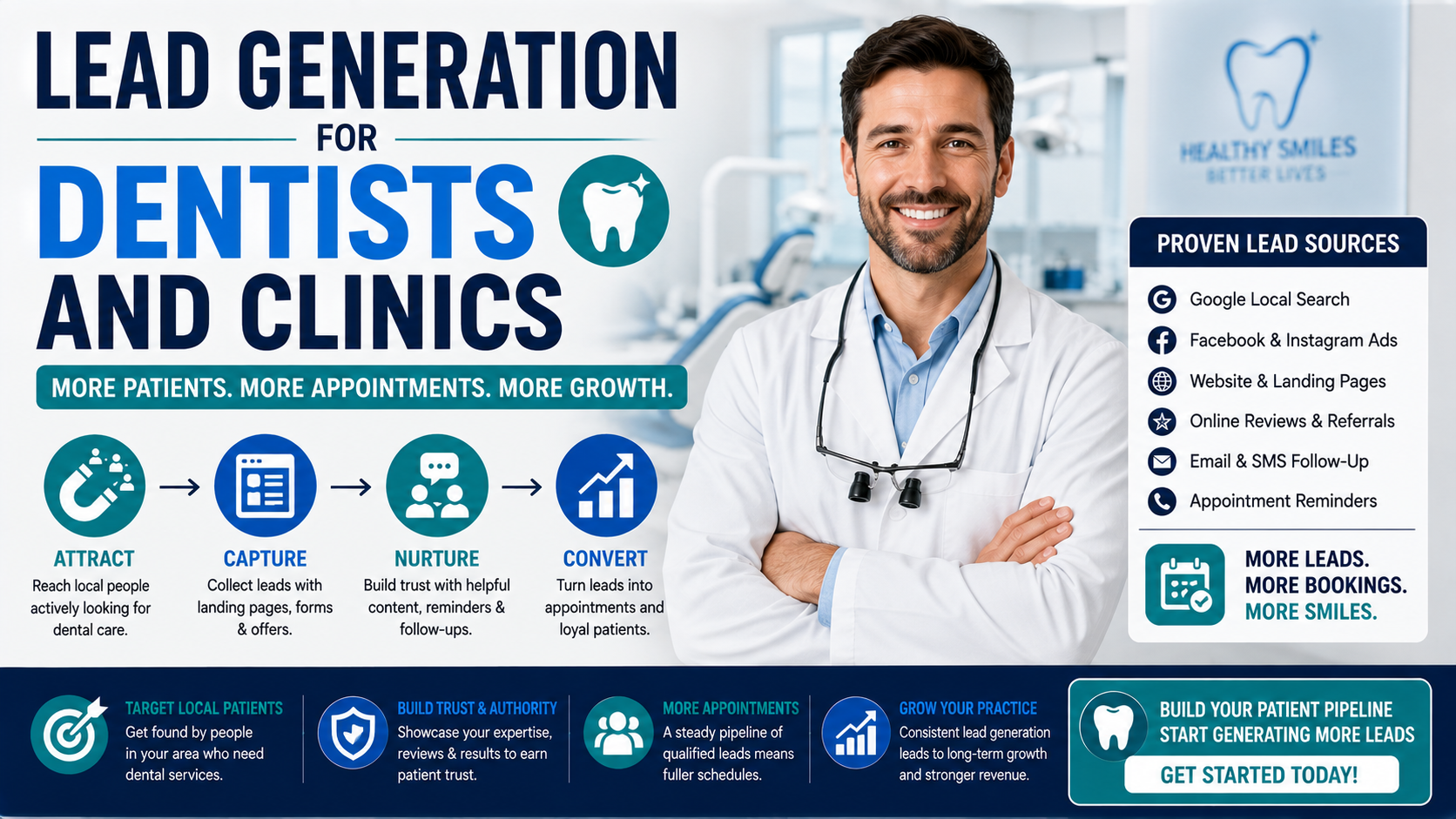
Lead generation for dentists and clinics is not simply about advertising. It is the complete process of helping the right patient discover the clinic, understand the service, feel comfortable making contact, and successfully attend an appointment.
That process includes:
- Being visible when someone needs care
- Explaining treatments clearly
- Building trust without making exaggerated claims
- Making booking easy
- Responding quickly
- Handling questions with care
- Reducing no-shows
- Tracking which enquiries become patients
- Encouraging appropriate repeat care and referrals
When these parts work together, marketing becomes much more predictable.
Start by Deciding Which Patients You Want to Attract
“More patients” is too broad to guide a useful campaign.
A person looking for an urgent tooth extraction behaves differently from someone researching dental implants for several months.
A parent looking for a pediatric dentist has different concerns from an adult comparing cosmetic treatment.
The same applies to general clinics. Someone needing a same-day consultation has different expectations from a patient considering a planned procedure.
Begin by identifying the services the clinic wants to grow.
For a dental practice, this may include:
- General dentistry
- Emergency dental care
- Dental implants
- Teeth whitening
- Braces or clear aligners
- Root canal treatment
- Pediatric dentistry
- Dentures
- Dental crowns
- Gum treatment
- Cosmetic dentistry
- Preventive examinations
For a broader medical or specialist clinic, priority services may include:
- General consultations
- Physiotherapy
- Dermatology
- Women’s health
- Diagnostic services
- Mental health consultations
- Nutrition support
- Orthopedic care
- Eye care
- Specialist assessments
Each service needs its own message.
A patient with severe dental pain wants to know whether the clinic can see them quickly.
A patient considering implants wants information about assessment, suitability, treatment stages, recovery, costs, and financing where available.
Trying to promote every treatment in one advertisement usually creates vague enquiries and weak conversion.
Define What a Qualified Patient Enquiry Means
Not every phone call or form submission is ready to become an appointment.
Some enquiries may involve:
- A treatment the clinic does not provide
- A location outside the clinic’s practical service area
- A request for diagnosis through social media
- An insurance plan the clinic does not accept
- A schedule the clinic cannot accommodate
- A person collecting prices with no immediate intention to book
- A patient who needs emergency care beyond the clinic’s capabilities
- Job applications or supplier enquiries
A qualified patient enquiry generally involves someone who:
- Needs a service the clinic offers
- Can reasonably travel to the location
- Has provided valid contact details
- Wants an appointment within a realistic period
- Understands that proper diagnosis may require an examination
- Is willing to follow the clinic’s booking process
For higher-value or longer treatment plans, the clinic may also need to understand:
- The patient’s main concern
- Whether they have had a recent examination
- Their preferred appointment times
- Whether another professional has referred them
- Their general timeline
- How they plan to pay or use coverage, where relevant
Qualification should never feel like rejecting people carelessly.
It helps the clinic direct patients to the right service and avoid promising treatment before a professional assessment.
Understand the Difference Between Urgent and Planned Care
Patient intent changes significantly depending on the situation.
Urgent Enquiries
Urgent dental enquiries may involve:
- Severe pain
- A broken tooth
- Swelling
- A lost filling
- A damaged crown
- Bleeding
- Dental trauma
Other clinics may receive urgent requests involving worsening symptoms or immediate concerns.
These patients usually care about:
- Whether the clinic can help
- How soon they can be seen
- Where the clinic is located
- What they should do next
- Whether walk-ins or urgent slots are available
- What the initial visit may involve
The website and phone process should make urgent booking simple.
Do not force a person in pain to read a long history of the clinic before finding the phone number.
Planned Treatment Enquiries
Planned treatment enquiries may involve:
- Dental implants
- Cosmetic procedures
- Orthodontic treatment
- Physiotherapy programs
- Skin treatments
- Long-term care plans
- Preventive assessments
These patients often compare:
- Practitioner experience
- Treatment process
- Cost
- Expected timeline
- Reviews
- Technology
- Location
- Payment options
- Appointment availability
They need educational content, realistic expectations, and a clear consultation process.
A clinic should not use the same landing page for urgent pain and an elective cosmetic treatment.
Make the Website Helpful Before Making It Promotional
Many clinic websites look polished but do not answer basic patient questions.
A patient should quickly understand:
- What services are offered
- Where the clinic is located
- When it is open
- How to book
- Whether urgent appointments are available
- Which professionals work there
- What happens during the first visit
- What payment or coverage options may apply
- How to contact the clinic
Test the website on a phone.
Most local patients will not explore it on a large desktop screen.
Check:
- Does the website load quickly?
- Is the phone number clickable?
- Is the address easy to find?
- Does the booking form work?
- Is the text readable?
- Can the patient find the right treatment page?
- Does the form confirmation explain what happens next?
- Are appointment requests reaching the correct team?
One clinic I reviewed had a booking form that appeared to work perfectly.
Patients saw a thank-you message after submitting it.
The clinic did not receive the requests because the form notification was connected to an email account nobody monitored.
For several weeks, the website generated leads that disappeared.
Test every form regularly.
Create Separate Pages for Important Treatments
A single page listing 20 treatments is not enough.
Create focused pages for the services patients actively research.
A dental implant page might explain:
- What implants are used for
- Who may need an assessment
- What happens during the consultation
- The general treatment stages
- Factors that affect the timeline
- Factors that affect the cost
- The importance of imaging and examination
- Aftercare expectations
- How to request an assessment
An emergency dentistry page should focus on:
- Common urgent problems
- How to contact the clinic
- Urgent appointment availability
- The clinic location
- What to bring
- What the first examination may include
- Situations requiring emergency medical assistance
A physiotherapy page might explain:
- Conditions commonly assessed
- What happens during the first appointment
- What clothing or information to bring
- How treatment plans are developed
- Typical appointment length
- Booking options
Each page should answer the questions a real patient asks before contacting the clinic.
Avoid copying the same paragraph onto every service page and changing only the treatment name.
Make the Clinic’s Location Obvious
Healthcare lead generation is heavily local.
A patient may like the clinic but still choose another provider because the location is easier.
Show the address and service area clearly on:
- Homepage
- Contact page
- Treatment pages
- Google Business Profile
- Social profiles
- Booking forms
- Advertisements
Include practical information such as:
- Nearby landmarks
- Parking
- Public transport
- Building floor
- Accessibility
- Reception hours
Small details can affect booking decisions.
A patient may abandon the process simply because they cannot tell whether parking is available or whether the clinic is accessible for an older family member.
Improve the Google Business Profile
For many dentists and clinics, the Google Business Profile is one of the most important patient-acquisition assets.
A complete profile should include:
- Correct clinic name
- Accurate category
- Phone number
- Website
- Address
- Opening hours
- Appointment link
- Services
- Practitioner information where appropriate
- Clinic photographs
- Reviews
Keep holiday and special hours accurate.
Upload real, professional photographs of:
- Reception
- Waiting area
- Treatment rooms
- Exterior entrance
- Team
- Equipment, where appropriate
- Parking or access
- Signage
Patients often use these images to decide whether the clinic feels clean, modern, private, and welcoming.
Avoid using only stock photographs of models in white coats.
They may look attractive, but they do not show what the patient will actually experience.
Build Trust Without Making Unrealistic Claims
Healthcare marketing requires more care than selling a normal consumer service.
Avoid claims such as:
- Guaranteed results
- Completely painless treatment
- Permanent cure
- Best dentist in the country
- Perfect results for everyone
- No risks
- Treatment suitable for all patients
Results vary because patients, conditions, and treatment plans vary.
Use accurate language:
- Treatment options are discussed after assessment.
- Suitability depends on clinical examination.
- Recovery and results can differ between patients.
- A consultation is required before a personalized plan can be recommended.
This language may appear less dramatic, but it builds stronger trust.
A patient should feel informed, not pressured.
Use Reviews Responsibly
Reviews can strongly influence clinic selection.
Patients often want reassurance about:
- Staff behavior
- Cleanliness
- Communication
- Waiting time
- Comfort
- Appointment handling
- The clarity of explanations
- Overall experience
Ask for feedback after the patient’s visit when it is appropriate.
A simple request could say:
Thank you for visiting our clinic. If you are comfortable doing so, we would appreciate an honest review of your experience. Your feedback helps us improve and helps other patients know what to expect.
Do not pressure patients to mention medical details publicly.
Do not ask only happy patients for reviews while actively discouraging others from giving feedback.
Never reveal private health or treatment information when responding to a review.
Even when the patient mentions details publicly, the clinic should respond carefully.
A safe response may say:
Thank you for your feedback. We take patient concerns seriously. Please contact our clinic directly so our team can review the situation appropriately.
Avoid confirming that the reviewer received a specific treatment.
Use Local Search Content to Answer Patient Questions
Patients often search with very specific questions.
Useful dental topics include:
- What causes tooth sensitivity?
- When should a broken tooth be examined?
- Dental implant consultation process
- Root canal versus extraction
- How long do braces usually take?
- What happens during a first dental visit?
- How often should a dental examination be scheduled?
- What affects the cost of dental treatment?
Other clinics may publish content such as:
- What to expect during a physiotherapy assessment
- When a specialist referral may be needed
- How to prepare for a diagnostic appointment
- Questions to ask during a consultation
- What information to bring to the clinic
The goal is not to diagnose a person through an article.
The goal is to help them understand the issue and decide on a safe next step.
Use clear disclaimers where appropriate and encourage professional assessment for individual concerns.
Use Search Advertising for High-Intent Patients
Search advertising can work because it reaches people already looking for a service.
Useful dental search themes might include:
- Dentist near me
- Emergency dentist
- Dental implant consultation
- Root canal dentist
- Pediatric dentist
- Teeth whitening clinic
- Orthodontist
- Dental crown treatment
Other clinics may target searches based on:
- Specialty
- Consultation type
- Treatment
- Location
- Urgency
Separate campaigns by service.
A person searching for emergency dental care should not land on a page focused on cosmetic whitening.
A person researching implants should see implant information, practitioner details, consultation options, and realistic treatment guidance.
Review Search Terms
Paid campaigns can attract unrelated searches.
Possible irrelevant terms may include:
- Jobs
- Salary
- Training
- Course
- School
- Free treatment
- DIY
- Home remedies
- Equipment suppliers
- Wholesale
- Unserved locations
The correct exclusions depend on the clinic.
Review the actual searches that triggered the ads instead of assuming the platform will filter them perfectly.
Use Social Media to Build Familiarity
Facebook and Instagram may not always capture urgent medical intent as effectively as search, but they can build trust and awareness.
Useful clinic content includes:
- Team introductions
- Clinic tours
- Treatment explanations
- Frequently asked questions
- Appointment preparation tips
- Preventive care information
- New equipment explanations
- Patient-experience improvements
- Community involvement
- Educational videos
Avoid posting only discounts and promotional graphics.
A short video of a dentist explaining what happens during an implant consultation may be more useful than a designed post saying, “Get Your Perfect Smile Today.”
Healthcare social content should educate without diagnosing individual viewers.
Avoid making a viewer feel that a general symptom proves they have a specific condition.
Be Careful With Before-and-After Content
Before-and-after images are common in dental, cosmetic, dermatology, and rehabilitation marketing.
They must be handled responsibly.
Before publishing:
- Obtain clear written permission
- Follow local advertising rules
- Avoid misleading editing
- Keep lighting and angles consistent
- Do not imply identical results for everyone
- Protect patient identity where required
- Explain that outcomes vary
- Avoid presenting unusual results as typical
Do not alter images in a way that exaggerates the outcome.
A heavily edited image may create short-term attention but long-term distrust.
Make Online Booking Simple
An appointment request form should not feel like a medical history questionnaire.
Collect only what is needed to begin the booking process.
Useful initial fields may include:
- Name
- Phone number
- Preferred location
- Service or treatment of interest
- Preferred appointment time
- New or existing patient
- Short message
Detailed medical information should be collected through an appropriate, secure clinical process rather than a general advertising form.
Do not ask patients to describe highly sensitive health information through an unprotected marketing tool.
The booking confirmation should explain:
- Whether the appointment is confirmed or only requested
- When the clinic will reply
- What number may call
- What to do for urgent concerns
- What information to prepare
A patient should not assume they have an appointment when the form only sent a request.
Respond Quickly and Clearly
Patient enquiries are often sent to several clinics.
The first helpful response has an advantage.
A strong reply might say:
Thank you for contacting GreenView Dental about an implant consultation. We have appointments available this week. Before booking, could you confirm your preferred day and whether you have had any recent dental imaging?
That is better than:
Thanks. Call us.
The reply uses the information the patient already provided and gives a clear next step.
During business hours, online requests should be acknowledged as quickly as the clinic can manage consistently.
Do not promise a five-minute response if the receptionist is also managing a busy waiting room.
Set a realistic internal target and monitor it.
Train the Reception Team as Part of Marketing
Marketing does not stop when the phone rings.
The receptionist or patient coordinator may have more influence on conversion than the advertisement.
They should be able to:
- Introduce the clinic clearly
- Listen without interrupting
- Understand the service requested
- Recognize urgent situations
- Explain the booking process
- Discuss fees appropriately
- Check availability
- Collect contact details
- Confirm the appointment
- Explain what happens next
A weak phone experience can lose an otherwise excellent lead.
Avoid scripts that sound cold or overly sales-focused.
The goal is to help the patient feel understood and guide them to the correct appointment.
Handle Price Questions Carefully
Patients often ask:
“How much does it cost?”
Avoid refusing to discuss price completely.
That can make the clinic appear secretive.
At the same time, do not quote a final treatment cost before assessment when the clinical situation affects the plan.
A useful response might be:
The consultation fee is [amount]. The full treatment cost depends on the examination, imaging, and treatment plan. After the assessment, the dentist will explain the available options and provide a written estimate before treatment begins.
For standardized services, a clear starting price or range may be appropriate.
Explain what is included.
Patients become frustrated when an advertised price excludes necessary parts of the service without making that clear.
Confirm Appointments Properly
An appointment is not the same as an attended appointment.
After booking, send a confirmation containing:
- Clinic name
- Date
- Time
- Address
- Practitioner or department
- Parking or access information
- What to bring
- Cancellation or rescheduling instructions
- Contact number
Use email, SMS, WhatsApp, or the clinic’s approved patient communication system.
Avoid including unnecessary sensitive health details in reminder messages.
A neutral reminder may say:
This is a reminder of your appointment at GreenView Clinic on Tuesday at 3:00 p.m. Reply or call us if you need to reschedule.
It does not need to describe the patient’s condition or treatment.
Reduce No-Shows
No-shows waste appointment capacity and marketing spend.
A clinic may generate enough leads but lose revenue because patients do not attend.
Ways to reduce no-shows include:
- Immediate booking confirmation
- Reminder 24 to 48 hours before
- Simple rescheduling options
- Clear location details
- Calendar invitation
- Confirmation request
- Deposit policy for selected treatments, where appropriate and lawful
- Waiting-list process
- Follow-up after missed appointments
Do not shame patients who miss appointments.
There may be genuine reasons.
A professional follow-up could say:
We noticed you were unable to attend today’s appointment. Please reply or call us if you would like to reschedule.
Track no-show rates by:
- Treatment
- Lead source
- Day
- Time
- New versus existing patient
Patterns may reveal that certain appointment types need stronger reminders or different scheduling.
Follow Up With People Who Do Not Book
Some patients enquire, receive information, and then pause.
They may be:
- Comparing clinics
- Waiting for salary or insurance information
- Discussing the decision with family
- Feeling nervous
- Unsure about treatment
- Waiting for another appointment
A reasonable follow-up can help.
For example:
You contacted us about clear aligner treatment earlier this week. I wanted to check whether you had any questions about the consultation or appointment availability.
A second follow-up might include a useful resource:
I’m sending our short guide explaining what happens during the first orthodontic assessment. It may help you prepare if you decide to book.
Do not keep messaging someone who has not consented to ongoing marketing.
Respect communication preferences and applicable privacy rules.
Follow Up After Consultations
Higher-value treatments often require time.
A patient may attend an implant, orthodontic, cosmetic, or specialist consultation but not decide immediately.
The follow-up should help the patient understand the plan.
It may include:
- Written treatment plan
- Estimate
- Appointment stages
- Financing information
- Relevant educational material
- Contact details for questions
- Next available appointment
A useful message might say:
We have sent the treatment plan discussed during your consultation. Please let us know if you would like clarification on the treatment stages, expected timeline, or payment options.
Avoid aggressive countdowns or false urgency.
Clinical decisions should not feel like flash sales.
Use Patient Coordinators for Complex Treatments
For longer or higher-value treatments, a patient coordinator can improve the experience.
The coordinator may help with:
- Scheduling
- Treatment-plan explanation
- Payment arrangements
- Follow-up questions
- Appointment reminders
- Coordination between departments
- Written information
The coordinator should not replace clinical advice.
Questions about diagnosis, risk, suitability, or medical outcomes should be answered by the appropriate licensed professional.
A clear separation between administrative support and clinical guidance protects both the patient and clinic.
Create Ethical Referral Systems
Patient referrals can be valuable because people trust recommendations from friends and family.
The simplest approach is to provide an experience worth recommending and make sharing easy.
A clinic might say:
We are glad you had a positive experience. Friends or family members can contact us directly if they need an appointment.
Be cautious with financial referral rewards in healthcare.
Rules vary by profession and location, and some incentives may be restricted or inappropriate.
A safer approach may involve:
- A simple thank-you
- Community donation
- General patient appreciation
- Non-clinical educational events
Any referral program should be reviewed for compliance with local professional and advertising requirements.
Build Relationships With Other Professionals
Dentists and clinics may receive referrals from:
- General practitioners
- Specialists
- Pharmacists
- Physiotherapists
- Dental laboratories
- Schools
- Employers
- Sports clubs
- Community organizations
- Other clinics
Professional referral relationships depend on:
- Clear communication
- Appropriate documentation
- Patient consent
- Timely updates
- Respect for professional boundaries
- Reliable appointment access
Do not approach referral partners with only a sales pitch.
Explain the type of patient the clinic can appropriately help, how referrals are handled, and how communication works.
Track Leads Without Compromising Patient Privacy
Lead tracking is essential, but healthcare information must be handled carefully.
A marketing tracker may include:
- Enquiry date
- General source
- Service category
- New or existing patient
- Contact status
- Appointment booked
- Appointment attended
- Consultation completed
- Treatment accepted
- General revenue category
Avoid storing detailed diagnoses, symptoms, treatment notes, or sensitive medical information inside ordinary marketing spreadsheets and advertising tools.
Clinical information belongs in the clinic’s approved patient record system.
Use access controls.
Only staff who need the information should have it.
When connecting forms, call tracking, advertising platforms, or CRM tools, confirm that the setup meets the privacy and healthcare requirements that apply to the clinic.
Measure the Full Patient Funnel
Do not measure only clicks or forms.
Track:
- Total enquiries
- Valid patient enquiries
- Qualified enquiries
- Calls answered
- Online requests contacted
- Appointments booked
- Appointments attended
- Consultations completed
- Treatment plans presented
- Treatments accepted
- New-patient revenue
- Cost per booked appointment
- Cost per attended appointment
- Cost per new patient
- Lead source
- No-show rate
Example
Suppose a dental implant campaign produces:
- 50 enquiries
- 40 valid enquiries
- 30 booked consultations
- 22 attended consultations
- 12 suitable treatment plans
- 5 accepted implant cases
The enquiry-to-booking rate is:
30 ÷ 50 × 100 = 60%
The booking attendance rate is:
22 ÷ 30 × 100 = 73.3%
The attended-consultation-to-accepted-case rate is:
5 ÷ 22 × 100 = 22.7%
These figures tell different stories.
If enquiry volume is high but booking is low, review reception handling.
If bookings are high but attendance is weak, improve confirmations and reminders.
If consultations happen but few patients proceed, review treatment communication, pricing clarity, follow-up, and whether the campaign is attracting suitable patients.
Track Lead Sources by Patient Quality
Different sources may produce different patient behavior.
For example:
Referrals
- Lower volume
- Stronger trust
- Higher attendance
- Better treatment acceptance
Google Search
- High intent
- Strong urgent demand
- Good local relevance
Social Media Ads
- More early-stage enquiries
- More price questions
- Longer follow-up
Organic Content
- Slower growth
- Better-informed patients
- Stronger long-term value
Online Directories
- Variable quality
- Strong competition
- More comparison shopping
Do not judge a source only by the number of leads.
Compare:
- Booking rate
- Attendance rate
- Treatment fit
- Acceptance rate
- Revenue
- Repeat care
- No-shows
A source with expensive leads may still produce lower patient-acquisition costs if those patients attend and proceed with suitable treatment.
Common Lead Generation Mistakes Dentists and Clinics Make
Promoting Every Service in One Campaign
Urgent care, preventive appointments, and planned treatment need different messages.
Hiding the Clinic Location
Patients should immediately know where the clinic is and how to reach it.
Using Complicated Booking Forms
Collect only what is needed for the initial booking.
Missing Calls
A patient may contact the next clinic immediately.
Responding Slowly to Online Enquiries
The patient may assume no appointments are available.
Making Unrealistic Claims
Avoid guarantees and exaggerated outcome promises.
Giving Diagnoses Through Social Media
Encourage appropriate professional assessment.
Using Patient Images Without Clear Permission
Consent and privacy must come first.
Posting Misleading Before-and-After Images
Keep presentation accurate and explain that results vary.
Collecting Sensitive Details in Marketing Tools
Use appropriate clinical systems for medical information.
Measuring Leads Instead of Attended Appointments
A form submission does not create clinic revenue.
Ignoring No-Shows
Attendance is a key stage of the funnel.
Avoiding Price Conversations Completely
Provide transparent consultation fees and explain cost factors.
Failing to Follow Up After Consultations
Patients may need clarification and time.
Sending Aggressive Promotions
Healthcare decisions should not feel pressured.
Depending on One Marketing Channel
Use local search, reviews, referrals, content, and follow-up together.
A Practical 30-Day Lead Generation Plan
Week One: Fix the Foundation
- Define priority services
- Define qualified enquiries
- Test phone numbers
- Test website forms
- Review mobile usability
- Update opening hours
- Improve Google Business Profile
- Set response-time targets
- Create a privacy-safe lead tracker
Week Two: Improve Treatment Pages
- Improve the urgent-care page
- Improve one high-value treatment page
- Add practitioner information
- Explain the first appointment
- Add realistic pricing guidance
- Add approved reviews
- Clarify booking steps
- Add clear location information
Week Three: Activate Lead Sources
- Ask suitable patients for honest reviews
- Publish two educational videos
- Create one frequently asked question article
- Reconnect with appropriate past enquiries
- Contact suitable referral partners
- Test one focused search or social campaign
Week Four: Review the Patient Journey
- Count valid enquiries
- Measure response times
- Review missed calls
- Measure booking rates
- Check no-show rates
- Measure consultation attendance
- Review treatment acceptance
- Compare sources
- Fix the weakest stage
Do not judge the entire strategy after a few days.
Healthcare decisions can take time, especially for planned or higher-cost treatments.
Look for patterns across several weeks and months.
Build a Patient Journey, Not Just an Advertising Campaign
Lead generation for dentists and clinics is not about filling a form database with names.
It is about creating a respectful, reliable path from concern to appropriate care.
That path may include:
- Google Business Profile
- Local search visibility
- Treatment pages
- Search advertising
- Educational content
- Social media
- Patient reviews
- Professional referrals
- Follow-up systems
Those channels help patients discover the clinic.
The clinic’s internal process determines what happens next.
That process needs:
- Answered calls
- Fast replies
- Clear information
- Appropriate qualification
- Easy booking
- Respectful communication
- Reliable reminders
- Ethical follow-up
- Privacy-safe tracking
A clinic does not need the largest possible number of enquiries.
It needs suitable patients who understand the service, feel comfortable with the clinic, attend their appointments, and receive the right professional guidance.
When marketing and patient care support each other, the result is not only a fuller schedule.
It is a better experience from the first search to the first appointment.