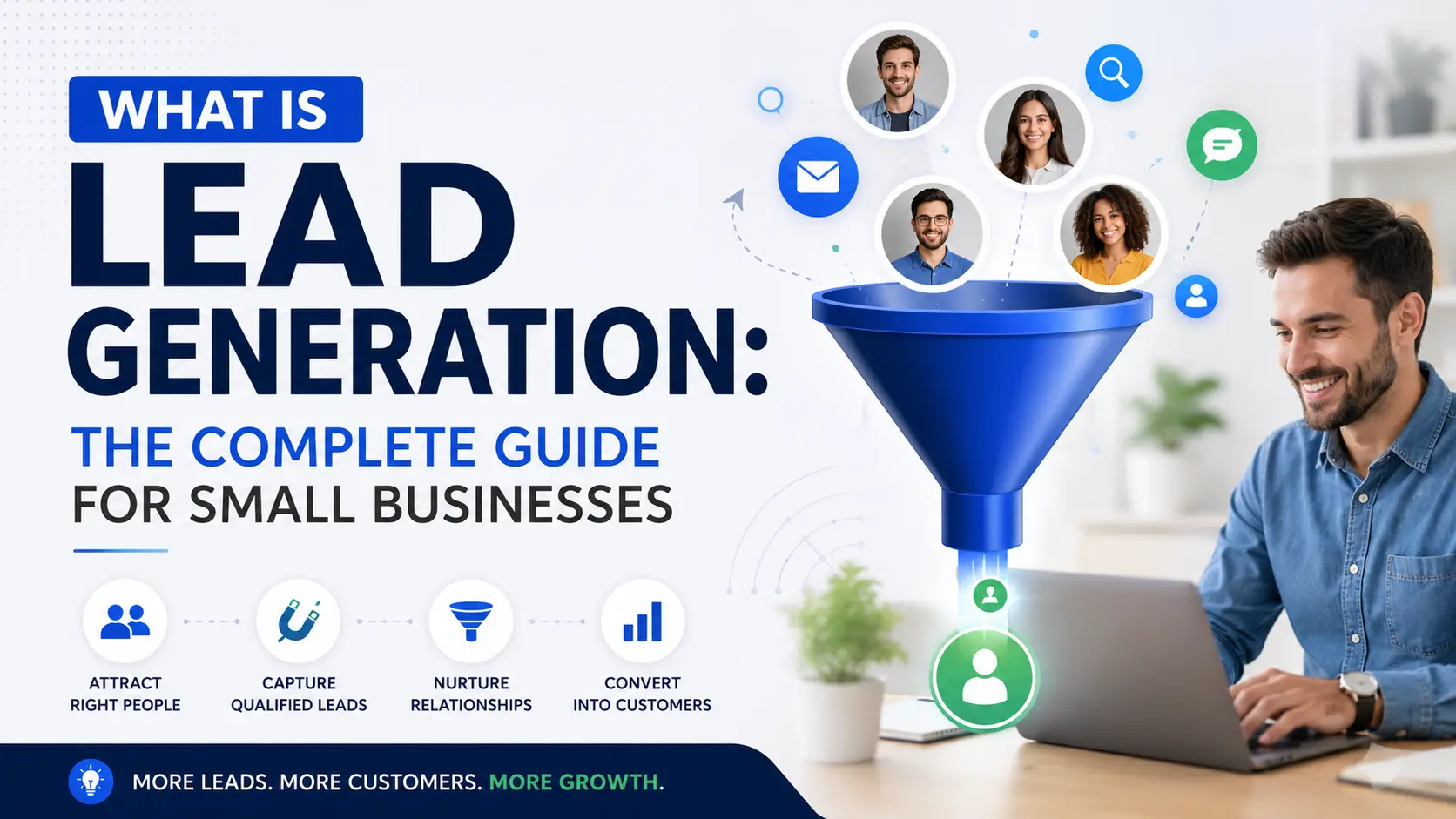
A few years ago, a friend of mine who runs a roofing company called me with a problem I have heard a hundred times since. His work was excellent. His customers loved him. But the phone just was not ringing.
He had a website. He had a Facebook page. He even paid a guy $300 to “do marketing” for a month. Nothing happened.
When I sat down with him and looked at everything, the issue was obvious. He did not have a marketing problem. He had a lead generation problem. Nobody had ever built a system that consistently brought new potential customers to his door. Everything he had was just sitting there, waiting for luck.
That conversation changed how I explain this topic to every small business owner I meet. So let me explain it to you the same way I explained it to him.
What a Lead Actually Is
A lead is simply a person who has shown some interest in what you sell and has given you a way to contact them.
That last part matters. Someone who likes your Facebook post is not a lead. Someone who drives past your shop is not a lead. But someone who fills out your contact form, calls your number, or messages you asking “how much for a 2,000 sq ft roof?” That is a lead.
Lead generation is just the process of making that happen on purpose instead of by accident.
I like to think of it this way. Word of mouth is fishing with your hands. Sometimes you catch something, sometimes you stand in the river all day and go home with nothing. Lead generation is building a net. The net works even when you are busy doing the actual work.
The Two Ways Leads Come to You
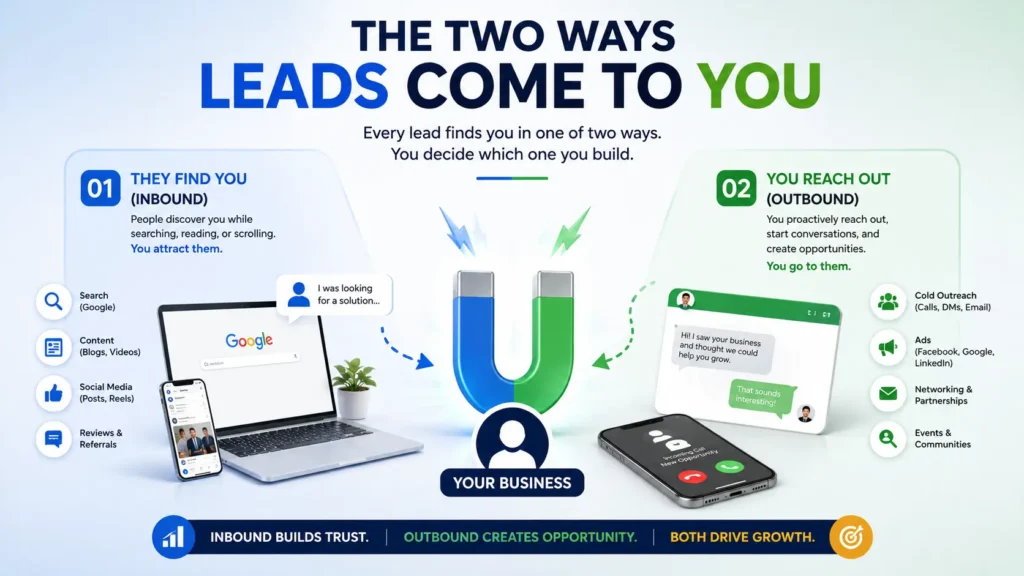
Every lead generation method on the planet falls into one of two buckets. Once you see this, the whole topic becomes much less confusing.
Inbound: They Find You
Inbound means the customer is already looking for what you do, and your job is to be visible when they look. Examples:
- Someone searches “roof repair near me” on Google and finds your Google Business Profile
- Someone reads your blog post about roof leak signs and calls you
- Someone sees your reviews and decides you are the safe choice
Inbound leads are gold. They already want the thing. You are not convincing anyone.
Outbound: You Find Them
Outbound means you go to the customer before they come to you. Examples:
- Cold email to property managers introducing your services
- Cold calls to businesses that fit your customer profile
- Knocking on doors after a storm (roofers know this one well)
Outbound leads take more effort to close because the person was not looking for you. But outbound has one huge advantage. You control the volume. If you need more leads this week, you send more emails this week. You cannot force Google to send you more searches.
Most healthy small businesses eventually use both. But you should not start with both. More on that in a minute.
How a Lead Becomes a Customer
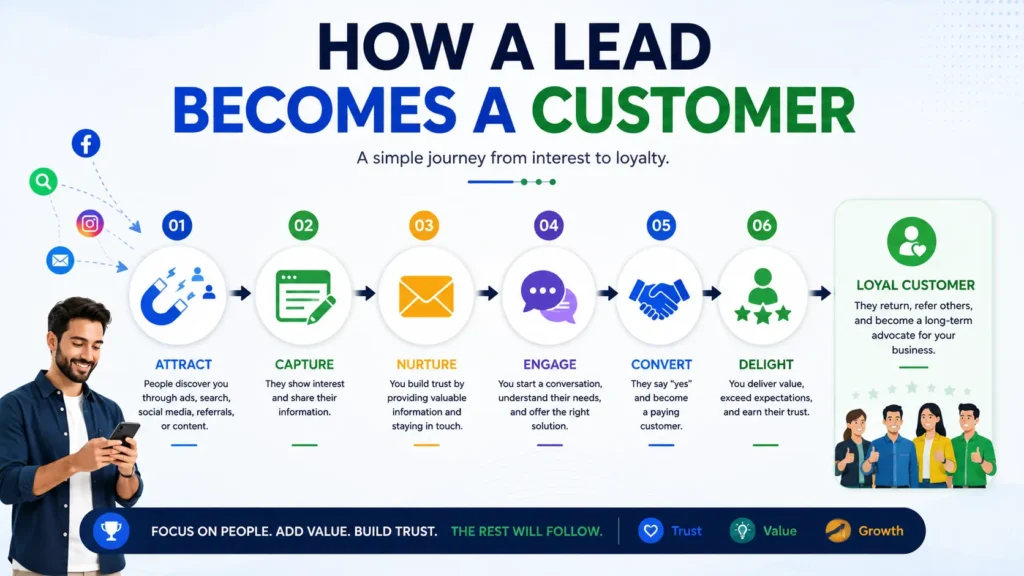
Here is the simple version of what people call a “funnel.” I avoid the jargon with clients and just draw four boxes:
- Stranger. They do not know you exist.
- Visitor. They saw you somewhere. Your website, your GBP listing, your email.
- Lead. They contacted you or gave you their contact info.
- Customer. They paid you.
Every marketing activity you will ever do is just moving people from one box to the next. When a business owner tells me “marketing does not work for me,” we look at the boxes and find exactly where people are getting stuck. Usually it is one of two places. Either nobody is seeing them at all, or plenty of people visit but nobody reaches out. Those are two completely different problems with completely different fixes.
Where Small Business Leads Actually Come From
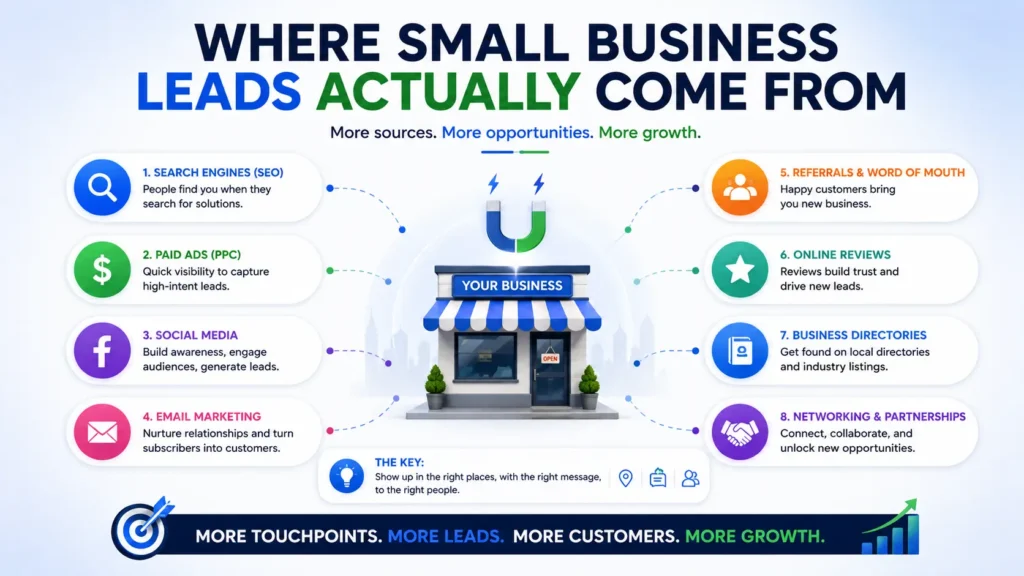
Let me be practical. Based on what I have seen working with local service businesses, here are the sources that consistently produce, roughly in order of value for money.
Google Business Profile. If you are a local business and you only do one thing from this entire article, do this. A properly set up and optimized profile puts you in the map results when people search for your service. It is free. I have watched businesses go from two calls a month to two calls a day from this alone. It took about three months of consistent effort, not three days, but the cost was basically zero.
Your website. Not a fancy one. A clear one. It needs to say what you do, where you do it, and how to contact you, and it needs to load fast on a phone. I have seen beautiful $5,000 websites produce zero leads because the phone number was hidden in the footer.
Reviews. People trust other people. A business with 80 good reviews will beat a business with 6 reviews almost every time, even if the second business is better at the actual work. Asking every happy customer for a review is a lead generation activity, even though most owners never think of it that way.
Referrals. The oldest method and still one of the best. The mistake is leaving it to chance. A simple system, even just texting past customers twice a year and offering a small thank you for referrals, turns random word of mouth into a predictable source.
Cold email. This one is for businesses that sell to other businesses. It is cheap and it scales, but it has a learning curve. You need a separate domain, proper technical setup, and patience with warmup. Tools like Instantly and Smartlead handle the sending side. I learned the domain lesson the hard way when an early campaign hurt deliverability on a main domain. Never send cold email from the domain your business runs on.
Paid ads. Google Ads and Facebook Ads work, but I deliberately put them last. Ads are a multiplier. If your website does not convert visitors and your reviews are weak, ads just help you lose money faster. Fix the foundation first, then pour traffic on it.
How to Start: A Simple Plan
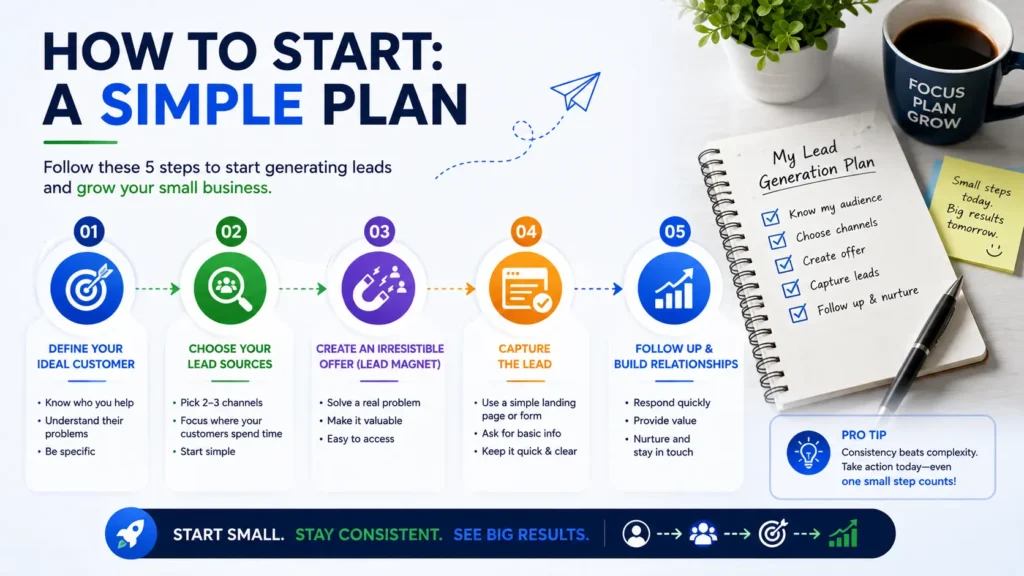
If you are starting from zero, here is the order I would follow. It is the same order I use with real clients.
Step 1: Define who your customer is. Not “everyone who needs a roof.” Something like “homeowners in these five zip codes with houses older than 15 years.” Specific targets make every later step easier.
Step 2: Set up your Google Business Profile properly. Right categories, real photos, complete services, correct service area. Then post to it weekly.
Step 3: Fix your website basics. Phone number at the top. A short form that asks for name, phone, and what they need. Nothing more. Every extra form field costs you leads.
Step 4: Build a review habit. Ask every single happy customer. Send them the direct review link by text. Make it a step in your job completion checklist, not something you do when you remember.
Step 5: Track everything for 30 days. A spreadsheet is fine. Where did each lead come from? How many became customers? You cannot improve what you do not measure, and the results will surprise you.
Step 6: Only then, add a second channel. Once one source works, add outbound or ads. One channel done well beats four channels done badly. I have never seen an exception to this.
Mistakes I See Over and Over
Chasing every shiny method at once. TikTok this week, cold calling next week, ads the week after. Nothing gets enough time to work. Pick one, commit for 90 days.
Slow follow-up. This one hurts to watch. A lead comes in, the owner is on a job site, and they call back two days later. The lead already hired someone else. Studies aside, common sense says the first business to respond usually wins. Even an auto reply that says “got your message, will call you by 6 pm” keeps you in the game.
Buying shared leads without understanding them. Platforms that sell the same lead to five contractors can work, but you are in a price war from the first second. Owners often compare those closing rates to their referral closing rates and conclude they are bad at sales. They are not. The leads are just colder and shared.
No tracking. If you do not know where your customers came from, you will keep spending on things that do not work and ignore the thing quietly producing your best jobs.
Giving up at week three. Organic methods like local SEO take a few months to build momentum. Most people quit right before the results start. The businesses that win are rarely the smartest. They are the most consistent.
A Few Honest Words Before You Go
Lead generation is not magic and it is not complicated. It is a system: be visible where your customers look, make it easy for them to contact you, respond fast, and keep track of what works.
My roofer friend? We set up his Google Business Profile properly, cleaned up his website, and built a review habit into his workflow. It took about four months before he felt the difference, and there was a discouraging stretch in the middle where nothing seemed to move. Today the phone rings without him touching anything, and his biggest problem is scheduling. That is a much better problem to have.
Start with one channel. Give it real time. Track your numbers. That is the whole secret, and nobody can sell it to you because you have to actually do it.