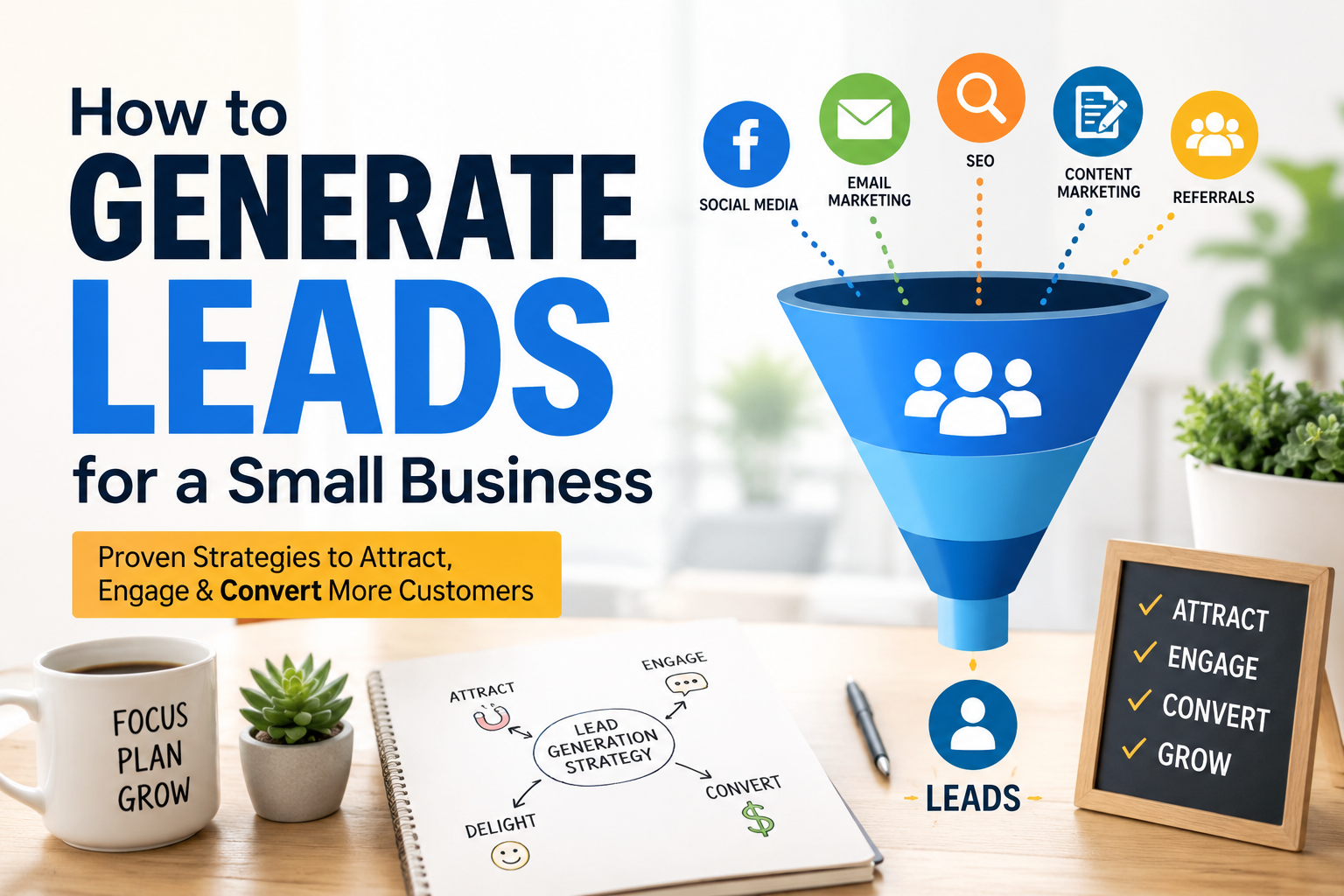
The first business I ever helped with lead generation was a two-person cleaning company. The owner, a woman in her forties, showed me her marketing setup on her phone. It was a Facebook page with 43 likes and a phone number written on the side of her car.
That was it. That was the whole system.
Here is the part that stuck with me. She was fully booked two weeks out. Her problem was not that she had no customers. Her problem was that she had no control. When a client moved away or a slow month hit, she had no way to turn the tap back on. She just had to wait and hope.
If that feeling sounds familiar, this guide is for you. I am going to walk you through the exact order I use when a business is starting from almost nothing. No theory, no fluff, just the steps.
Quick note before we start. If you are not sure what counts as a lead in the first place, read my complete guide on what lead generation is first. This article assumes you know the basics and just want to get moving.
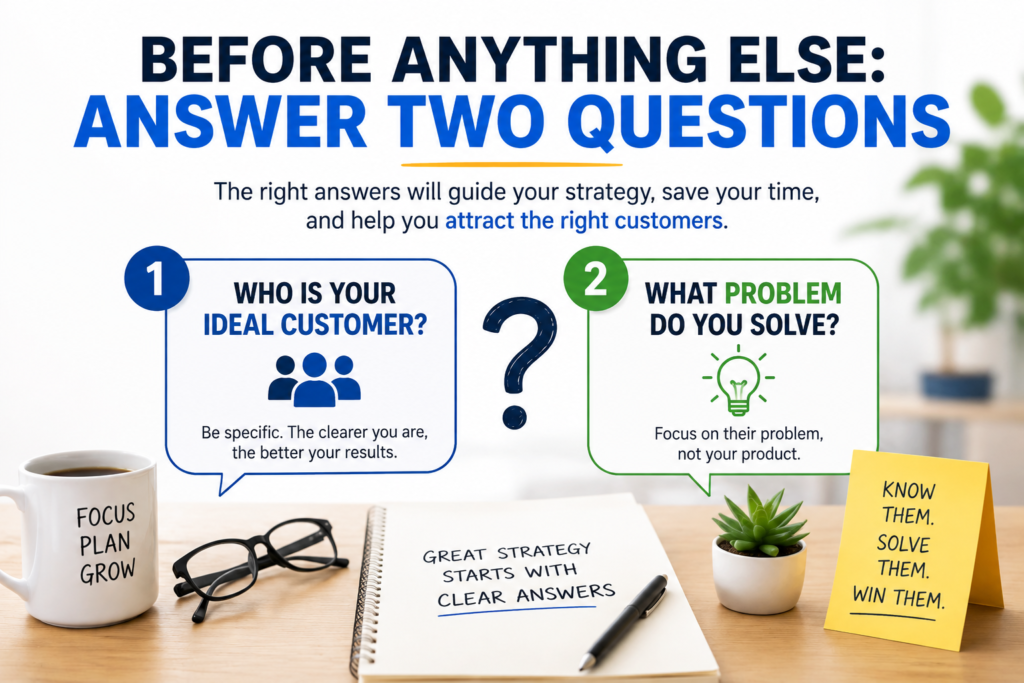
Before Anything Else: Answer Two Questions
Every failed lead generation attempt I have seen died because the owner skipped this part. It takes twenty minutes with a notebook.
Question 1: Who exactly is your best customer?
Not “anyone who pays.” Look at your last ten customers and find the pattern. For the cleaning company, the pattern was clear once we looked: busy families in three specific neighborhoods, most of them found through one school’s parent group. That is targeting gold, and it was sitting in her booking history the whole time.
Question 2: What do you want them to do?
Call you? Fill a form? Message you on WhatsApp? Pick one main action. Everything you build will point at it. Businesses that offer five contact options usually get contacted through none of them, because a confused visitor leaves.
Write both answers down. You will use them in every step below.
Week 1: Claim Your Google Business Profile
If your business serves a local area, this is the highest value free asset you will ever own. When someone searches “house cleaning near me,” the map results at the top come from Google Business Profiles, not websites.
Here is your week one checklist:
- Go to google.com/business and claim or create your profile
- Choose your main category carefully; it is the single strongest ranking signal on the profile
- Fill every section: services, hours, service area, description
- Upload at least ten real photos of your work, your team, your vehicle
- Verify the profile (Google usually sends a code or asks for a video)
Do not rush this. A half-filled profile ranks like a half-filled profile. My cleaning client went from invisible to appearing in map results for her neighborhood within about six weeks of completing this properly, and the calls that came from it were the easiest sales she ever made. Those people were already looking for her service.
Week 2: Set Up a Simple Way to Capture Leads
A lead has to land somewhere. You have two solid options as a beginner, and one is honestly harder than most people admit.
Option A: A one-page website. It needs your service, your area, three to five reviews, photos, and a big, obvious phone number with a short contact form. That is all. You can build this on WordPress in a weekend. Perfection is not the goal; clarity is.
Option B: Skip the website for now. Controversial, but true for some businesses. A fully optimized Google Business Profile plus WhatsApp Business can capture leads on its own for a few months. I would rather see a great profile and no website than a bad website that leaks every visitor.
Whichever you pick, test it yourself from your own phone. Search for your business, tap the number, fill the form. I once found a client’s contact form had been silently broken for four months. Nobody had ever tested it. Nobody knows how many leads died in that form.
One more thing for week two: get a free CRM or even a simple spreadsheet. HubSpot has a free tier that works fine. Every lead that comes in gets written down with a date, a source, and a status. This habit feels pointless at five leads a month. It becomes your most valuable business record at fifty.
Week 3: Start the Review Engine
Reviews are lead generation. People read them, trust them, and choose based on them. Yet most small businesses collect reviews the same way they collect rain, by standing outside and waiting.
Build a tiny system instead:
- Get your direct Google review link from your Business Profile dashboard
- Save a short message template on your phone: “Thanks for choosing us! If you were happy with the work, a quick Google review would mean a lot. Here is the link.”
- Send it to every customer the same day you finish the job
- Ask past happy customers too, one polite message each, oldest first
Timing matters more than wording. Ask on the day of the job, while they are still happy and it is still fresh. Ask a week later and most people mean to do it and never do.
Aim for one new review a week. In six months you will have a wall of social proof that outranks competitors who have been around for years.
Week 4: Wake Up Your Past Customers
This is the fastest lead source on this list, and beginners always skip it because it feels too simple.
Go through your phone, your invoices, your old messages. Build a list of every past customer. Then send a short personal message. Not a broadcast blast, a real message:
“Hi Sarah, it has been a while since we did your gutters. Getting the schedule ready for spring, want me to pencil you in?”
When the cleaning company owner did this with about sixty past customers, she booked eleven jobs in ten days. Zero cost. These people already know you and trust you. They just forgot about you, because everyone forgets about everyone.
If you serve other businesses instead of homeowners, the same idea works through email. Keep it personal and short.
Month 2 and Beyond: Add One Channel at a Time
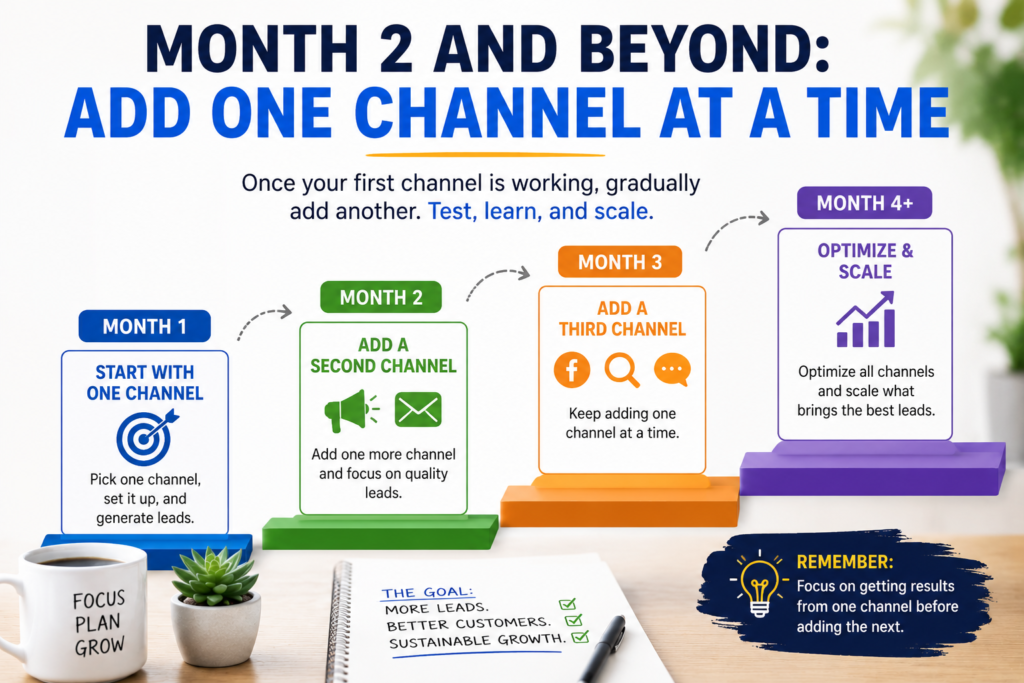
Once the foundation above is running, you can add a growth channel. Pick one based on where your customers actually are:
- Local Facebook groups. Be genuinely helpful in neighborhood groups. Answer questions in your area of expertise without pitching. The profile clicks and DMs follow. Slow but real.
- Partnerships. Find businesses that share your customer but not your service. A cleaner and a landscaper. A dentist and a gym. Agree to refer each other. One good partnership can feed you for years.
- Simple email updates. Collect emails from customers and send something useful once a month. Mailchimp is free at small volume. This keeps you remembered, and remembered businesses get the call.
- Paid ads. Only after everything above works. Ads amplify what exists. If your profile is weak and you have four reviews, ads will just introduce more people to a weak first impression.
The rule is one new channel at a time, given at least 60 days before you judge it. I have watched people try six channels in six weeks and conclude that “nothing works.” Everything they tried was starved of time.
Mistakes That Will Slow You Down
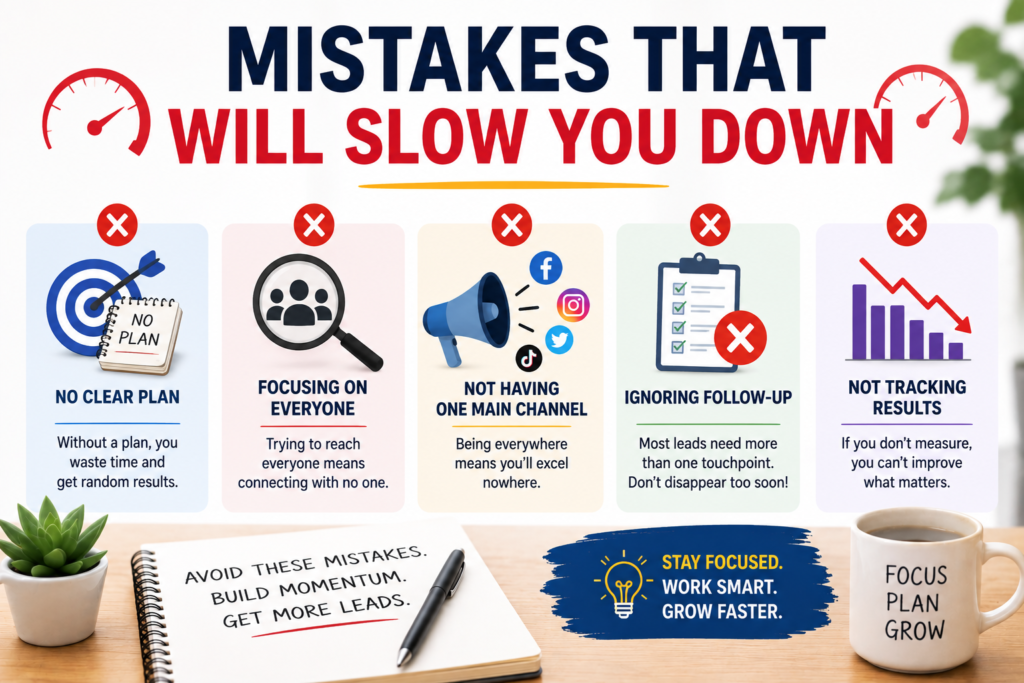
Waiting until things are perfect. The logo, the website colors, the business cards. None of it generates leads. Launch ugly, improve later.
Ignoring speed. When a lead calls or messages, the clock starts. Reply within minutes if you can, within the hour at worst. The first responder wins more often than the best business does. It is not fair, but it is how it works.
Doing everything with no records. If you cannot tell me where your last ten customers came from, you are guessing with your money and your time.
Confusing activity with progress. Posting daily on Instagram feels productive. But if your customers are 45-year-old homeowners searching Google, you are performing for an empty room. Go where the buyers are, not where the posting feels fun.
Quitting during the quiet phase. Weeks three to eight are usually silent. The profile is climbing, the reviews are building, but the phone has not changed yet. This is the phase where most people stop. The ones who push through it are the ones you see everywhere a year later.
Where This All Ends Up
Six months after that first meeting, the cleaning company had a full Google Business Profile with over thirty reviews, a one-page website, a spreadsheet of every lead, and a habit of messaging past customers every season. She hired her first employee that year.
Nothing in her system is clever. That is the entire point. Lead generation for a small business is not about secrets; it is about building boring little assets that stack: a profile that ranks, reviews that convince, a form that works, a list that remembers you.
Start with week one. Do it properly. The rest follows in order, and future you will be very glad present you started today.