An HVAC company owner once showed me his lead list with genuine frustration. Thirty two names in a spreadsheet. He was calling every single one of them, twice a week, with the same pitch.
“I spend half my day on the phone,” he told me, “and I closed two jobs last month.”
We went through the list together. About ten of those names had entered a giveaway he ran for a free thermostat. They wanted a free thermostat, not a $6,000 AC installation. Meanwhile, buried at row 27, there was a property manager who had asked for a quote on servicing twelve units. Twelve. He had been getting the same generic follow up call as the giveaway crowd, and by the time we found him, he had signed with someone else.
That spreadsheet taught me something I now repeat constantly: getting leads is only half the game. Knowing what kind of lead you are holding is the other half. Because a lead is not one thing. There are types, and each type deserves a completely different amount of your time.
If you are brand new to this whole topic, my complete lead generation guide covers the foundations. Here, we are going one level deeper.
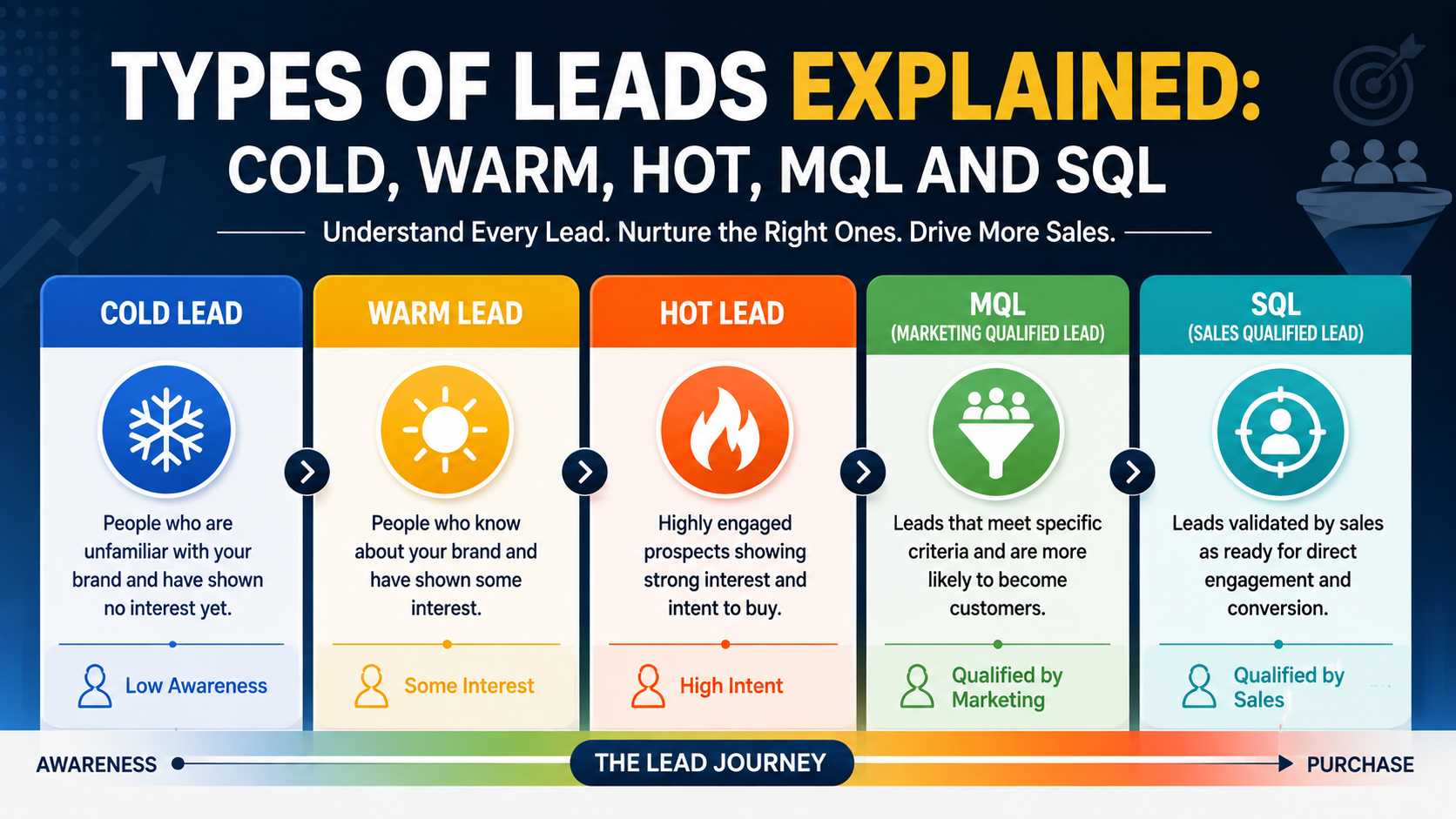
The Temperature Scale: Cold, Warm, Hot
The easiest way to think about lead types is temperature. It measures one simple thing: how ready is this person to buy right now?
Cold Leads
A cold lead matches your customer profile but has shown little or no buying interest yet. Maybe they entered your giveaway. Maybe they are on a list of local businesses you plan to email. Maybe they followed your page once.
The giveaway people in that spreadsheet? Cold. They gave contact info, but the interest was in the prize, not the service.
Cold leads are not worthless. They are just early. Treat them like seeds, not like sales. A monthly useful email, a seasonal offer, an occasional check in. Low effort, long patience. What you must not do is spend your best selling hours calling them twice a week. That is how you burn your day and their goodwill at the same time.
Warm Leads
A warm lead has shown real interest but is not ready to pull the trigger. They asked a question on your website. They requested a price list. They said “we are thinking about redoing the patio next year.” The interest is genuine, the timing is not now.
Warm leads are where follow up systems earn their keep. Most small businesses lose these people not because the lead went bad, but because the business forgot to stay in touch. A simple reminder in your CRM, even the free HubSpot tier or a spreadsheet column that says “check back in March,” captures jobs that would otherwise drift to whoever happens to be around when the timing turns right.
Hot Leads
A hot lead wants the thing, now. “Can you come give a quote this week?” “What is your availability for February?” “Our AC died, how fast can you get here?”
Hot leads have one rule: speed beats everything. When someone is hot, they usually contact two or three businesses at once, and the first proper response wins a shocking share of those deals. This is why I tell every owner to treat a hot lead like a smoke alarm. You do not finish your sandwich first. The property manager in row 27 was scorching hot, and he got room temperature treatment. That mistake had a five figure price tag.
MQL and SQL: The Jargon, Translated
If you read marketing blogs or use any CRM, you will run into these two abbreviations. They sound corporate, but the idea underneath is simple and genuinely useful.
MQL: Marketing Qualified Lead
An MQL is someone who has engaged with your marketing enough to look promising, but nobody has confirmed anything by talking to them. They downloaded your pricing guide. They visited your services page three times. They clicked your ad and filled the form.
In plain words: the clues look good, but it is still just clues.
SQL: Sales Qualified Lead
An SQL is someone who has been checked, usually through an actual conversation, and confirmed as a real potential buyer. Right need, real budget, realistic timeline, and they are the actual decision maker.
In plain words: a human confirmed this one is real.
The gap between those two matters more than the fancy names. The giveaway entrants were, technically, MQLs. Marketing activity captured them and they looked like leads. One five minute phone conversation would have revealed most of them were never buying anything. That conversation is the qualification step, and skipping it is why the owner was drowning in calls that went nowhere.
You do not need the abbreviations day to day. But you absolutely need the idea: there is a difference between “looks interested” and “confirmed interested,” and only a conversation moves someone from the first group to the second.
A Simple Labeling System You Can Start Today
You do not need software with lead scoring algorithms. You need five labels and the discipline to use them. Here is the setup I give small clients, works in a spreadsheet or any CRM:
- NEW for anything that just came in and has not been looked at
- HOT for ready-to-buy now, respond within the hour
- WARM for real interest, wrong timing, set a follow up date
- COLD for fits the profile, no real interest yet, monthly touch at most
- DEAD for wrong fit, no budget ever, or asked to be left alone
Then add two columns: where the lead came from, and the next action date. That is the entire system.
The step people skip is the sorting conversation. When a NEW lead arrives, your first job is a quick call or message with two or three honest questions. What are you looking to get done? When are you hoping to do it? Have you set a budget range? Five minutes, and NEW becomes HOT, WARM, COLD, or DEAD. Now your day has an obvious shape: HOT first, always. WARM on their scheduled dates. COLD once a month in batch. DEAD never again.
When the HVAC owner switched to this, his phone time dropped to under an hour a day and his closing rate went up. Same leads, same market, same person selling. He just stopped giving his best hours to his worst prospects.
Mistakes to Avoid With Lead Types
Treating every lead as hot. It feels diligent, but it spreads urgent energy across people who need patience, and patient energy is all you have left for people who need urgency.
Treating every lead as cold. The opposite failure. Some owners put every inquiry into a “newsletter list” and wonder why nobody converts. The hot ones needed a phone call, not a newsletter.
Letting warm leads expire silently. “Call me in spring” is a real order waiting to happen, but only if something reminds you in spring. No reminder system means no spring call, every time.
Arguing with the temperature. Sometimes a lead you love is simply cold, and no amount of follow up warms them on your schedule. Chasing one dream lead while ten decent ones wait is a well disguised form of procrastination.
Never updating labels. Temperatures change. A cold lead replies to your March email asking for pricing, they just went warm. A hot lead ghosts three times, they cooled. The labels are living, or they are useless.
What This Changes for You
Once you see leads as types instead of one big pile, your daily decisions almost make themselves. Who gets called first is obvious. Who gets the monthly email is obvious. Who you politely stop chasing is obvious too.
The HVAC owner still runs his giveaways, by the way. They fill the top of his list with cold names, some of which warm up over a year, and that is fine, because now he knows exactly which rows deserve his morning and which ones can wait for the last coffee of the day.
Label your current list this week, even if it is only fifteen names. The property manager hiding in your row 27 is worth the hour it takes.