A real estate agent once showed me a spreadsheet containing more than 300 leads.
At first glance, it looked like a healthy pipeline.
Then we started opening the records.
Some leads had never been called. Others had received one generic message months earlier. Several were renters who had been placed in the same follow-up sequence as luxury-property investors. A few people had already bought or sold through another agent, but they were still marked as “active.”
The database was large.
The real pipeline was almost empty.
This is one of the biggest misunderstandings in real estate lead generation. More names do not automatically create more deals.
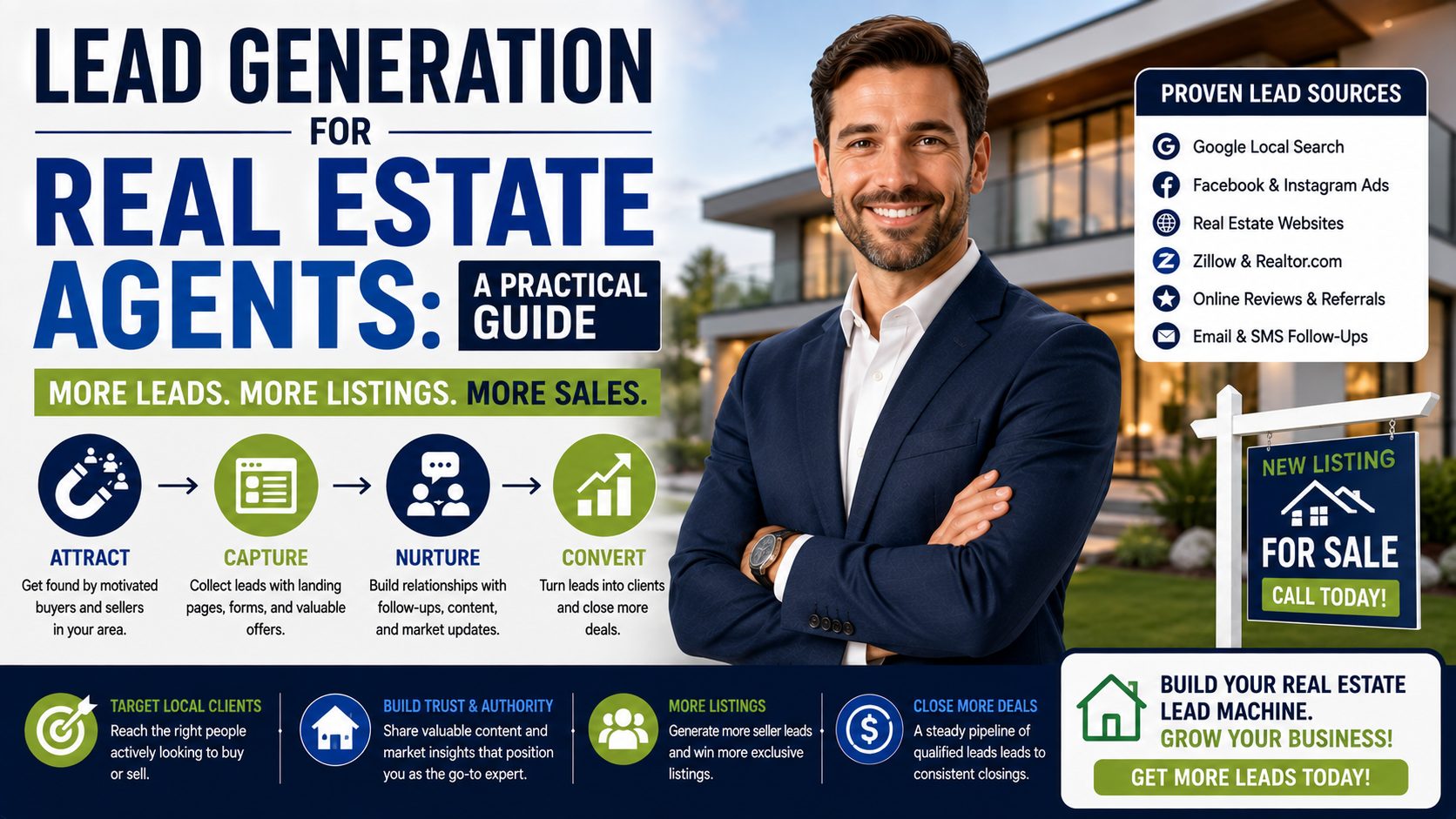
A useful real estate lead system has to do several things well:
- Attract the right type of person
- Understand whether they are buying, selling, renting, or investing
- Identify their location and timeline
- Respond while their interest is still active
- Provide useful information without pressuring them
- Continue following up when the decision takes months
- Track what happens after the first enquiry
Real estate has a longer and less predictable sales cycle than many local services. Someone may request a property brochure today and purchase six months later. A homeowner may ask about property value but delay selling until the following year.
That makes consistency more important than one impressive campaign.
The agents who build reliable pipelines are usually not the ones sending the most messages. They are the ones who understand where each prospect is in the decision process and stay relevant until the timing is right.
Start by Choosing Which Real Estate Leads You Actually Want
“More real estate leads” is too broad.
A first-time buyer, luxury seller, commercial tenant, overseas investor, and landlord looking for property management are completely different prospects.
They have different questions, budgets, timelines, and expectations.
Before choosing a marketing channel, decide which opportunities you want to grow.
These may include:
- Home buyers
- Property sellers
- First-time buyers
- Luxury-property clients
- Investors
- Landlords
- Tenants
- Commercial buyers
- Commercial tenants
- New-development buyers
- Relocation clients
- Property-management clients
A campaign should usually focus on one main audience.
For example, a seller campaign could offer:
Request a local property value review and recent sales comparison.
A first-time buyer campaign might offer:
Get a simple home-buying checklist and a list of properties within your target budget.
An investor campaign could focus on:
Receive new rental-property opportunities that match your preferred area and investment range.
The more specific the offer, the easier it becomes to attract suitable enquiries.
Define What a Qualified Real Estate Lead Means
Not everyone who clicks on a listing is ready to work with an agent.
Some people are browsing.
Others are comparing neighborhoods, checking prices, or looking at homes they cannot realistically purchase.
That does not make them worthless. It means they are at a different stage.
A qualified buyer lead may have:
- A clear property type in mind
- A realistic price range
- A preferred area
- A rough purchasing timeline
- Financing arranged or being explored
- A willingness to attend viewings
- Valid contact information
A qualified seller lead may have:
- Ownership or authority to sell
- A property inside your service area
- A realistic selling timeline
- A reason for considering the move
- Willingness to discuss pricing and preparation
- A clear next step, such as a valuation or listing meeting
An investor lead may require more information:
- Target area
- Budget
- Expected return
- Property type
- Cash or financing
- Risk preference
- Holding period
- Existing portfolio
- Decision-making process
A qualified lead is not necessarily someone ready to sign today.
It is someone whose situation is clear enough for you to provide the right next step.
Separate Buyer Leads From Seller Leads
Buyer and seller lead generation should not be treated as the same process.
Buyers usually respond to:
- Property alerts
- New listings
- Price reductions
- Neighborhood guides
- Mortgage and affordability information
- Viewing opportunities
- Buying checklists
- Market comparisons
Sellers usually respond to:
- Property valuation offers
- Recent local sales
- Pricing advice
- Home preparation guides
- Marketing plans
- Case studies
- Buyer-demand updates
- Timing discussions
A buyer wants access and guidance.
A seller wants confidence that the agent understands pricing, presentation, negotiation, and local demand.
Sending both groups to one general contact page creates confusion.
Build separate landing pages, email sequences, and qualification questions for each.
Your Website Should Answer the Questions Prospects Actually Ask
Many real estate websites look attractive but provide little help.
They contain large property photographs, a short biography, and a button saying “Contact Me.”
That may be enough for someone who already knows the agent.
It is not enough for a stranger comparing several professionals.
A useful website should explain:
- Which areas you serve
- Which property types you handle
- Whether you represent buyers, sellers, landlords, or investors
- How your process works
- What happens after an enquiry
- How to book a consultation
- How to request a valuation
- How to receive property alerts
- What experience or local knowledge you bring
Keep the mobile experience simple.
A prospective buyer may visit the site while sitting outside a property. A seller may open it after seeing your board in the neighborhood.
The phone number, WhatsApp link, form, and booking option should be easy to find.
Test every form yourself.
A form can display a thank-you message even when the lead notification is not reaching the agent.
Create Separate Pages for Important Areas
Real estate is local.
People rarely search only for “real estate agent.” They search for an agent, property, or market information connected to a specific city, neighborhood, community, or development.
A useful area page can include:
- Types of property available
- Typical buyer profiles
- Local amenities
- Transport
- Schools, described carefully and factually
- Parks and commercial areas
- Current listings
- Recent market activity
- Common property styles
- Buying considerations
- Selling considerations
- A way to receive updates
Avoid making unsupported claims such as “the safest neighborhood” or “the best area for families.”
Use factual information and let the reader decide what fits their needs.
Also avoid creating dozens of empty pages where only the neighborhood name changes.
A useful local page should demonstrate real knowledge.
Build Content Around Real Client Questions
The best real estate content ideas often come from conversations.
Keep a list of questions people ask during:
- Phone calls
- Property viewings
- Listing appointments
- Open houses
- WhatsApp chats
- Social media messages
- Email enquiries
- Negotiations
Buyer questions may include:
- How much deposit do I need?
- Should I buy now or keep renting?
- What costs are involved beyond the purchase price?
- How long does the buying process take?
- How do property viewings work?
- What should I inspect before making an offer?
- How much below asking price can I offer?
Seller questions may include:
- How much is my property worth?
- Should I renovate before selling?
- How long will it take to sell?
- What does an agent charge?
- Should I accept the first offer?
- What happens if the property does not sell?
- How should I prepare for photography?
Each question can become:
- A blog article
- A short video
- A social post
- An email
- A downloadable checklist
- A frequently asked question
- A conversation starter
Useful content helps prospects before they are ready to appoint an agent.
That is how trust begins.
Use Property Listings as More Than Inventory
A property listing is not only a product page.
It is also a lead-generation opportunity.
A strong listing should include:
- Accurate photographs
- Clear description
- Important property details
- Location context
- Viewing information
- Price information where appropriate
- Relevant disclosures
- One clear call to action
Avoid exaggerated phrases that could apply to any property.
“Stunning luxury lifestyle opportunity” says very little.
Explain what makes the property useful or distinctive:
- Flexible home office
- Recently updated kitchen
- Private outdoor area
- Convenient access to transport
- Separate rental unit, where legally permitted
- Suitable storage
- Corner location
- Building amenities
Be accurate.
Overedited photographs, misleading camera angles, hidden defects, or inaccurate descriptions may increase initial enquiries but damage trust during viewings.
Offer Property Alerts That Are Actually Useful
Property alerts can be a strong buyer lead magnet.
But a generic signup saying “Join our mailing list” does not give the prospect a clear reason to subscribe.
Make the offer specific:
Receive new three-bedroom listings in North Lahore under your selected budget.
Or:
Get weekly updates on apartments available in Gulberg, including new listings and price changes.
Ask for useful information:
- Preferred area
- Property type
- Budget
- Bedrooms
- Buying timeline
- Cash or financing status
- Contact preference
Do not ask 20 questions on the first form.
Collect enough information to send relevant properties and begin a conversation.
If the alert regularly sends homes outside the person’s budget or preferred location, they will stop paying attention.
Use Valuation Offers Carefully
“Find out what your home is worth” is one of the most common seller lead offers.
It can work, but it often attracts people who are curious rather than ready to sell.
That is not automatically bad.
The problem begins when every valuation request is treated like an immediate listing opportunity.
A better process may include:
- Collect the property address or area.
- Ask about property type and condition.
- Ask when the owner may consider selling.
- Provide an initial range or market context.
- Explain that an accurate valuation may require a property visit.
- Schedule follow-up based on the timeline.
Be careful with automated estimates.
A tool may provide a rough figure, but property condition, floor, view, improvements, access, legal status, and recent nearby transactions can affect the real market value.
Position an online estimate as a starting point, not a guaranteed selling price.
Improve Your Google Business Profile
A Google Business Profile can help local prospects find and evaluate an agent or agency.
Keep the profile complete and accurate.
Include:
- Correct business name
- Phone number
- Website
- Office hours
- Address or service information
- Business description
- Professional photographs
- Team photographs
- Office exterior
- Recent updates
- Reviews
Ask clients for honest reviews after a successful transaction.
Useful reviews may mention:
- Communication
- Local knowledge
- Negotiation
- Responsiveness
- Guidance
- Organization
- Problem-solving
- The buying or selling experience
Do not give clients a script telling them exactly what to write.
Natural reviews are more credible.
When replying to reviews, avoid revealing private financial, legal, or transaction information.
Use Social Media to Demonstrate Local Knowledge
Real estate social media often becomes a stream of listing graphics.
Listings matter, but they are not the only useful content.
A better content mix includes:
Property Content
- New listings
- Walkthroughs
- Open houses
- Price changes
- Recently sold properties
- Project launches
Market Education
- What is happening with local inventory
- Common buyer mistakes
- Pricing factors
- Negotiation lessons
- Transaction timelines
- Mortgage preparation
Neighborhood Content
- Local businesses
- Parks
- Transport options
- Market areas
- Development updates
- Community events
Process Content
- Preparing for photography
- What happens after an offer
- How viewings are arranged
- What sellers should prepare
- How inspections work
Personal Trust Content
- Behind the scenes
- Client stories
- Property tour days
- Team introductions
- Lessons from difficult transactions
The goal is to help people associate you with a market and a type of property problem.
Make Property Videos Useful
A property video should do more than move quickly through rooms while loud music plays.
Add context.
Explain:
- Who the property may suit
- What is unusual about the layout
- Which features are easy to miss
- How the rooms connect
- What the surrounding area offers
- Whether there are limitations buyers should consider
A simple opening might be:
This apartment looks compact from the entrance, but the layout includes a separate study and more storage than most two-bedroom units in this building.
That gives the viewer a reason to continue.
Use vertical video for platforms such as Instagram and short-form video feeds, but also capture horizontal footage for websites and longer tours.
Avoid using wide-angle lenses so aggressively that the property appears much larger than it is.
Use Open Houses as Lead-Generation Events
An open house should create more than foot traffic.
Prepare a simple process.
Collect:
- Name
- Contact information
- Whether they are buying or selling
- Current area
- Preferred property type
- Timeline
- Whether they already have an agent
Do not force every visitor into a lengthy registration process before allowing them to look around, unless local rules or property-security requirements make it necessary.
During the event, focus on understanding the visitor.
Ask:
What brought you to this property?
The answer may reveal that they:
- Want to buy something similar
- Own a nearby property
- Are researching prices
- Need more space
- Are considering moving later
- Are helping a relative
Follow up with context after the event.
Weak message:
Thanks for attending. Are you interested?
Better message:
Thanks for visiting the Maple Street property. You mentioned that the kitchen felt small but liked the outdoor space. I have two upcoming listings nearby with larger kitchens. Would you like me to send the details when they are available?
That message proves you listened.
Use Paid Search for High-Intent Prospects
Google Ads can help reach people actively searching for services or specific property needs.
Possible search themes include:
- Real estate agent in a location
- Sell my house
- Property valuation
- Buyer’s agent
- Homes for sale in an area
- Investment property consultant
- Commercial property agent
- Apartments for sale in a development
Create separate campaigns and landing pages for:
- Buyers
- Sellers
- Investors
- Commercial clients
- Specific developments
- Important locations
Review actual search terms.
Depending on your market, exclude irrelevant searches related to:
- Jobs
- Salaries
- Courses
- Licensing
- Free templates
- Property management software
- Unserved locations
- Rentals, when you only handle sales
- Commercial property, when you only serve residential clients
Do not pay for clicks that have no realistic connection to your business.
Use Facebook and Instagram Lead Campaigns Carefully
Social advertising can generate buyer registrations, seller enquiries, development leads, and property-viewing requests.
However, low-friction forms may also attract people who click casually.
A useful form should ask a few qualifying questions.
For a buyer campaign:
- Which area interests you?
- What property type do you want?
- What is your approximate budget?
- When are you planning to buy?
- Are you using cash or financing?
- What is the best contact method?
For a seller campaign:
- Where is the property?
- What type of property is it?
- When might you sell?
- Is the property currently listed?
- What is the best number for a valuation discussion?
Keep housing advertising fair and inclusive.
Do not use discriminatory language or targeting. Follow applicable housing, advertising, privacy, and platform requirements in your location.
Build a Separate Strategy for Investors
Investors usually need more than attractive property photographs.
They may care about:
- Purchase price
- Expected rent
- Occupancy
- Service charges
- Taxes
- Financing
- Maintenance
- Exit options
- Development risk
- Property management
- Legal status
- Construction timeline
Create investor content that explains the numbers carefully.
Avoid guaranteed-return claims unless they are legally supportable and genuinely guaranteed by an appropriate party.
Use realistic language:
- Projected rental income
- Estimated return
- Based on current comparable properties
- Subject to vacancy, expenses, market conditions, and final transaction costs
An investor may appreciate honesty more than an exaggerated sales presentation.
Respond While Interest Is Active
Real estate leads often contact several agents.
A buyer requesting a listing may also message every agent advertising a similar property.
A homeowner seeking a valuation may speak with three agencies.
Respond quickly.
A useful first response should:
- Mention the property or service
- Confirm whether it is available
- Answer the immediate question
- Ask one or two qualifying questions
- Give a clear next step
For example:
Thanks for asking about the three-bedroom apartment in Gulberg. It is currently available, and viewings are being arranged for Saturday. Are you buying for your own use or as an investment, and what time would suit you?
That is stronger than:
Send number.
For a seller:
Thanks for requesting a valuation for your property in DHA Phase 6. I can prepare a useful comparison, but I need to confirm the plot size, current condition, and whether you are considering selling within the next three months.
The response begins helping immediately.
Do Not Depend Only on Phone Calls
People have different communication preferences.
Offer suitable options such as:
- Phone
- Website form
- Calendar booking
- Social messaging
WhatsApp Business can help agents organize conversations using labels and saved replies.
Useful labels might include:
- New buyer
- Seller enquiry
- Viewing booked
- Investor
- Follow-up
- Offer submitted
- Long-term nurture
Saved replies can speed up routine messages, but edit them before sending.
A message should still reflect the person’s property, location, and question.
Build a Follow-Up System for Long Sales Cycles
A real estate lead may not be ready this week.
That does not mean they should disappear.
Create follow-up based on the person’s timeline.
Immediate Buyer
Send relevant listings and arrange viewings.
Buyer Planning Within Three Months
Send market updates, finance preparation guidance, and suitable new listings.
Buyer Planning Later
Check in less frequently with useful area or price updates.
Immediate Seller
Arrange a valuation and listing discussion.
Seller Planning Later
Send recent comparable sales, preparation advice, and occasional market updates.
Do not send the same weekly “Are you ready?” message for six months.
Good nurturing gives the person useful information at the right frequency.
Follow Up After Property Viewings
Many agents complete a viewing and then wait for the buyer to call.
Follow up while the property is still fresh.
Ask specific questions:
- What did you think of the location?
- Did the layout work?
- Was the price within expectations?
- What would prevent you from making an offer?
- Would you like to see similar properties?
A message might say:
Thanks for viewing the house this afternoon. You mentioned that the upstairs bedrooms worked well, but the road noise was a concern. I have another property coming up two streets away in a quieter position. Would you like an early look?
This follow-up creates value even when the first property was unsuitable.
Follow Up With Sellers After a Valuation
A valuation meeting does not always produce an immediate listing.
The homeowner may be:
- Comparing agents
- Waiting for another property
- Discussing the move with family
- Repairing the home
- Watching the market
- Handling legal or financial issues
Send a clear follow-up containing:
- Recommended pricing range
- Recent comparable sales
- Marketing plan
- Preparation suggestions
- Expected process
- Agreed next step
Avoid calling every day.
Agree on timing:
You mentioned that the final decision will be made after speaking with your family next weekend. Shall I call you on Monday afternoon?
Specific follow-up feels more professional than constant checking.
Use a CRM Instead of Relying on Memory
Real estate has too many long-term opportunities for memory-based follow-up.
A CRM can track:
- Name
- Phone
- Lead source
- Buyer or seller
- Areas of interest
- Budget
- Property type
- Timeline
- Financing status
- Viewings
- Valuations
- Offers
- Follow-up date
- Next action
- Won or lost
- Lost reason
Tools such as HubSpot, Pipedrive, Follow Up Boss, Zoho CRM, Airtable, and Google Sheets can support different business sizes and processes.
The best CRM is not the one with the most features.
It is the one the agent updates after calls, viewings, and meetings.
Every active lead should have:
- A status
- An owner
- A next action
- A next date
“Follow up later” is not a useful instruction.
“Send new three-bedroom listings on Friday” is.
Reconnect With Old Leads
Old leads can produce some of the easiest new conversations because the relationship has already started.
Review:
- Old buyer enquiries
- Previous viewings
- Unsuccessful offers
- Expired seller opportunities
- Past valuation requests
- Investors who delayed
- Tenants approaching renewal
- Past clients
Use the original context.
For example:
You viewed several apartments in Gulberg last year but decided to wait. Prices and available inventory have changed since then. Are you still considering a purchase, or has your plan changed?
For a seller:
We discussed selling your property last spring, but the move was delayed. I wanted to check whether it is back on your schedule. I can update the market comparison if useful.
Do not pretend the conversation is new.
The previous details are the reason the follow-up feels relevant.
Build a Referral System
Referrals are powerful in real estate because trust matters heavily.
Past clients can refer:
- Friends
- Relatives
- Colleagues
- Neighbors
- Business partners
Do not wait for referrals to happen accidentally.
After a successful transaction, say:
I’m glad the move is complete. Most of my business comes from introductions, so please feel free to share my details if someone you know needs help buying or selling.
Stay connected after closing.
Useful post-transaction contact can include:
- Anniversary message
- Local market update
- Property-care reminder
- Contractor recommendation
- Neighborhood update
- Home-value review
- Invitation to a client event
Do not contact past clients only when asking for business.
A referral relationship grows from ongoing usefulness.
Build Relationships With Local Professionals
Real estate agents share clients with:
- Mortgage brokers
- Lawyers
- Home inspectors
- Contractors
- Interior designers
- Movers
- Property managers
- Insurance agents
- Accountants
- Developers
- Photographers
A strong professional network can help transactions move smoothly and create new introductions.
Do not build partnerships only around exchanging phone numbers.
Understand:
- Service quality
- Coverage area
- Communication process
- Pricing approach
- Availability
- Professional standards
Your recommendation affects your reputation.
Refer only professionals you trust.
Track the Full Real Estate Funnel
Do not measure only form submissions.
Track:
- Total enquiries
- Valid leads
- Qualified leads
- Conversations
- Viewings booked
- Viewings attended
- Valuations booked
- Listing appointments
- Listings won
- Offers
- Transactions closed
- Commission or revenue
- Lead source
- Cost per qualified lead
- Cost per client
- Time to close
- Lost reason
Buyer Example
Suppose a buyer campaign generates:
- 100 enquiries
- 70 valid leads
- 40 qualified buyers
- 25 viewings
- 10 offers
- 3 completed transactions
The raw lead-to-transaction rate is:
3 ÷ 100 × 100 = 3%
The qualified-lead-to-transaction rate is:
3 ÷ 40 × 100 = 7.5%
Seller Example
A valuation campaign generates:
- 40 valuation requests
- 25 suitable homeowners
- 15 appointments
- 8 listing opportunities
- 4 signed listings
- 2 completed sales during the reporting period
Different stages may take months, so review both current pipeline and completed transactions.
Track Lead Sources Separately
Different sources produce different behavior.
Referrals
Often lower volume but stronger trust.
Property Portals
High property interest but heavy competition.
Google Search
Strong local or service-based intent.
Social Media Ads
More early-stage registrations and longer follow-up.
Organic Content
Slower growth but better-informed prospects.
Open Houses
Strong property-specific intent and possible neighborhood seller leads.
Cold Outreach
Requires careful targeting and more trust-building.
Do not combine every source into one conversion rate.
A referral lead and a broad social registration are not equal.
Common Real Estate Lead Generation Mistakes
Chasing Lead Volume
A large database is not a strong pipeline when records are inactive or poorly qualified.
Treating Every Lead the Same
Buyers, sellers, tenants, and investors need different conversations.
Responding Too Slowly
The prospect may already be speaking with another agent.
Sending Generic Listing Links
Match properties to budget, area, and needs.
Failing to Ask About Timeline
A person buying this month should not receive the same follow-up as someone planning for next year.
Ignoring Financing Status
This information affects which properties and next steps are realistic.
Publishing Misleading Listings
Accuracy builds long-term trust.
Overediting Property Photos
The viewing should not feel like a different property.
Using Only Listing Content
Market education and local knowledge help build authority.
Sending Every Lead to the Homepage
Use buyer, seller, investor, and location-specific pages.
Failing to Follow Up After Viewings
An unsuitable property can still lead to another transaction.
Treating Valuation Requests as Immediate Sellers
Some homeowners need long-term nurturing.
Not Updating the CRM
Real estate sales cycles are too long for memory alone.
Keeping Dead Leads Active Forever
Move inactive contacts into long-term nurture and record a realistic next date.
Making Guaranteed Investment Claims
Use realistic projections and disclose relevant assumptions.
Ignoring Housing Advertising Rules
Marketing and targeting must remain fair, inclusive, and compliant with local regulations.
A Practical 30-Day Lead Generation Plan
Week One: Fix the Foundation
- Choose priority lead types
- Define a qualified buyer and seller
- Test website forms
- Improve mobile contact options
- Update Google Business Profile
- Clean the CRM
- Add clear pipeline stages
- Set response-time expectations
Week Two: Improve the Website
- Build or improve the buyer page
- Build or improve the seller page
- Create one useful neighborhood page
- Improve valuation-request questions
- Add reviews
- Add real case studies
- Explain what happens after contact
Week Three: Activate Lead Sources
- Publish two property videos
- Publish one educational post
- Reconnect with old leads
- Ask recent clients for reviews
- Contact two referral partners
- Promote one specific buyer or seller offer
Week Four: Review the Funnel
- Count valid leads
- Measure response times
- Review viewing attendance
- Review valuation appointments
- Record lost reasons
- Compare sources
- Check CRM follow-up dates
- Improve the weakest stage
Do not judge the strategy only by immediate transactions.
Real estate decisions often take months.
Look at whether the system is producing more qualified conversations, appointments, viewings, valuations, and serious opportunities.
Build Relationships, Not Just a Lead List
Lead generation for real estate agents is not one campaign.
It is a connected system built around visibility, local knowledge, trust, follow-up, and timing.
That system may include:
- Website
- Local search
- Property portals
- Google Business Profile
- Social media
- Paid advertising
- Open houses
- Referral partners
- Past clients
- Educational content
- CRM follow-up
Those channels create opportunities.
The agent’s process determines what happens next.
That process needs:
- Fast replies
- Useful questions
- Accurate property information
- Relevant recommendations
- Reliable viewing arrangements
- Consistent seller follow-up
- Long-term nurturing
- Clear record keeping
A real estate agent does not need the largest database in the market.
A smaller group of buyers, sellers, and investors who are properly understood and followed up with can produce far more business than thousands of names sitting untouched inside a CRM.
The job is not only to find leads.
It is to recognize which conversation matters now, which one needs time, and what useful step will keep the relationship moving forward.