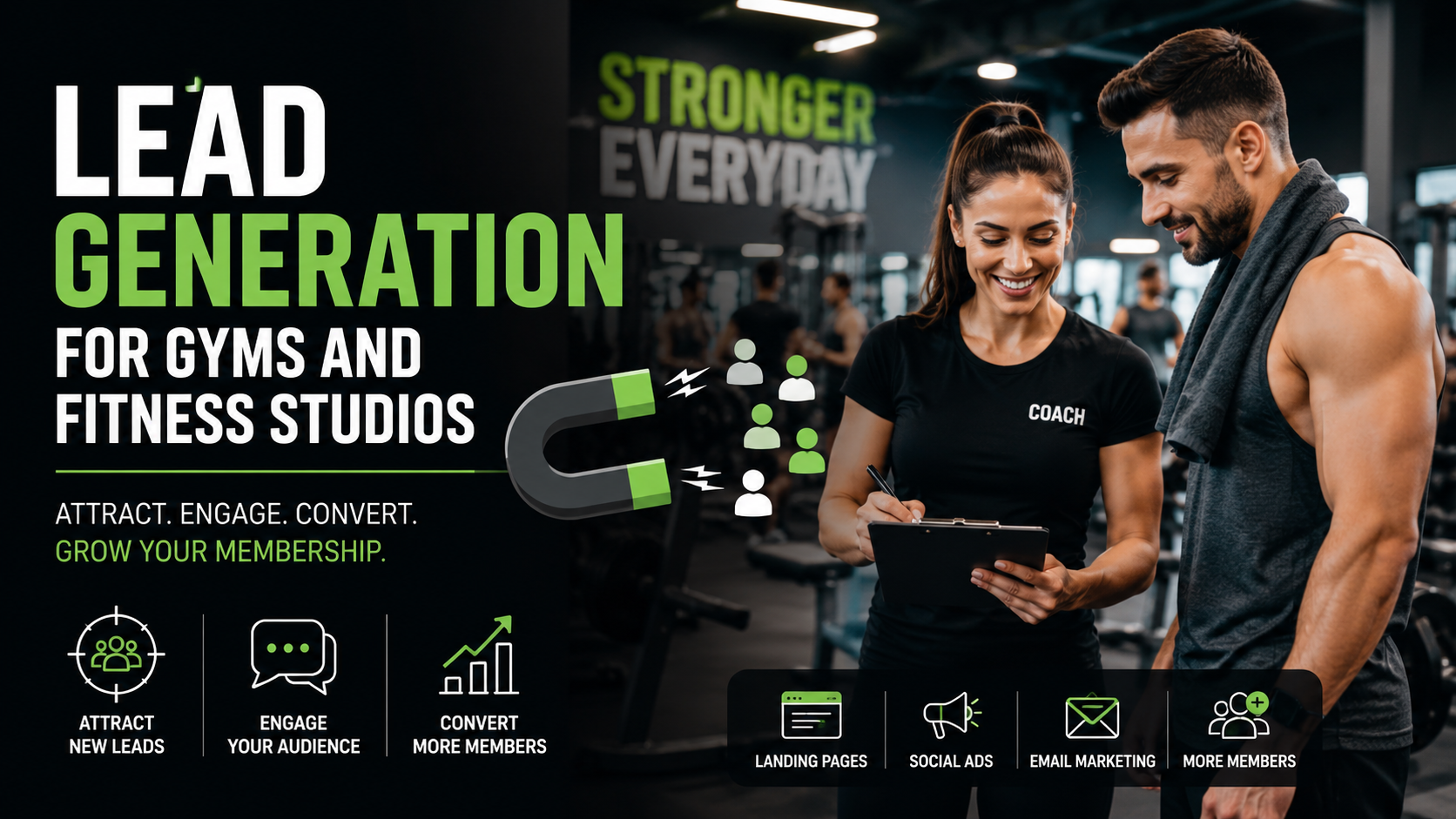
A gym owner once told me that the business had generated more than 100 leads from a January campaign.
That sounded impressive until we checked what happened next.
Some people had downloaded a free pass but never visited. Others asked about membership prices and received a reply two days later. A few attended one class, but nobody followed up afterward. The staff were busy managing the gym floor, so new enquiries were spread across Instagram messages, WhatsApp chats, website forms, and a notebook behind reception.
The campaign had worked.
The follow-up system had not.
This is one of the biggest lessons in gym lead generation: collecting names and phone numbers is not the same as gaining members.
A useful system has to take someone through several small steps:
- They discover the gym or studio.
- They understand who it is for.
- They choose a trial, visit, or consultation.
- They receive a quick response.
- They actually attend.
- They have a positive first experience.
- Someone explains the appropriate membership options.
- They join.
- They continue attending long enough to see value.
A weak handoff at any stage can waste a good lead.
Lead generation for gyms and fitness studios is therefore not only a marketing problem. It is a combination of local visibility, offers, booking, customer service, sales, and retention.
Decide Which Members You Want to Attract
“More gym members” is too broad to guide a useful campaign.
A large general gym, women-only studio, CrossFit box, yoga studio, personal-training facility, martial arts school, and rehabilitation-focused fitness center all attract different people.
Even inside one gym, different offers may appeal to:
- Beginners
- Experienced lifters
- Busy professionals
- Parents
- Older adults
- Athletes
- Weight-training clients
- Group-class members
- Personal-training clients
- Corporate teams
- Students
- People returning after a long break
Start by deciding which part of the business you want to grow.
You may want more:
- Monthly memberships
- Personal-training clients
- Small-group training members
- Yoga-class bookings
- Pilates memberships
- Strength-program participants
- Boxing or martial arts students
- Morning-class attendance
- Off-peak memberships
- Corporate wellness clients
- Youth-program registrations
This decision affects the offer, photographs, advertising, landing page, and sales conversation.
A campaign for personal training should not use the same message as a low-cost open-gym membership.
A personal-training prospect may want coaching, accountability, privacy, and a personalized plan.
An open-gym member may care more about equipment, opening hours, location, cleanliness, and price.
Define What a Qualified Fitness Lead Means
Not every enquiry is ready to become a member.
Some people may be:
- Outside the practical travel area
- Looking for a class you do not offer
- Interested only in a free trial
- Comparing prices with no clear timeline
- Unable to attend during available hours
- Looking for medical treatment rather than fitness coaching
- Requesting guarantees about weight loss or body changes
- Applying for work
- Selling products or services
A qualified gym or studio lead may be someone who:
- Lives or works nearby
- Wants a service you provide
- Can attend during your operating or class hours
- Has a realistic membership budget
- Is interested in starting within a reasonable period
- Has valid contact information
- Is willing to book a visit, trial, or consultation
For personal training, you may also want to know:
- Preferred training schedule
- Experience level
- Main fitness goal
- Whether they prefer private or small-group sessions
- How often they expect to train
- Whether they have any limitations that need appropriate professional attention
Avoid asking for detailed health information through ordinary marketing forms.
Health history, injuries, and medical considerations should be handled through an appropriate consultation and secure process.
Sell the Next Step, Not the Entire Membership
One common mistake is asking a stranger to buy a 12-month membership immediately.
That is a large decision for someone who has never entered the building.
A smaller first step is easier.
Examples include:
- Book a gym tour
- Claim a one-day pass
- Attend an introductory class
- Schedule a fitness consultation
- Try a seven-day pass
- Book a beginner session
- Join an open day
- Request membership information
The best first step depends on the business.
A yoga studio may offer a discounted introductory class.
A personal-training studio may offer an assessment and goal-setting consultation.
A general gym may offer a facility tour or day pass.
The offer should help the prospect experience the environment without creating unnecessary pressure.
Be Careful With Free Trials
Free trials can generate plenty of leads.
They can also attract people who visit several gyms without any intention of joining.
This does not mean free trials are a bad idea.
It means they need structure.
A useful trial process may include:
- The person selects a date.
- The gym confirms the booking.
- A staff member asks what they want from the trial.
- The person receives arrival instructions.
- Someone welcomes them by name.
- They are shown the relevant facilities or class.
- A short conversation happens afterward.
- Membership options are explained.
- Follow-up is sent if they do not join immediately.
A free pass that arrives by email with no booking date often gets forgotten.
A scheduled visit creates more commitment.
You can also test a low-cost introductory offer instead of a completely free trial.
Examples include:
- Three classes for a small introductory price
- One-week starter pass
- Beginner workshop
- Paid assessment credited toward membership
- Introductory personal-training package
A small payment may reduce lead volume but improve attendance.
Build an Offer Around a Real Problem
Weak gym offer:
Join the best gym in town and transform your life.
This sounds promotional but does not explain why the person should act.
A stronger offer might say:
New to strength training? Book a beginner gym tour and learn how our coaches help members start safely and confidently.
Another example:
Struggling to fit workouts around work? Try our 45-minute early-morning small-group sessions this week.
For a yoga studio:
Join a beginner-friendly yoga class designed for people who have never attended a studio session before.
The message should connect to a recognizable concern.
Common concerns include:
- Feeling intimidated
- Not knowing how to use equipment
- Lack of accountability
- Busy schedule
- Previous memberships going unused
- Wanting a more supportive environment
- Needing a structured routine
- Preferring smaller classes
- Looking for local convenience
Avoid promising specific physical results in an unrealistic period.
Claims such as “lose 10 kilograms in 30 days” can create false expectations and may be inappropriate for many people.
Focus on the experience, coaching, structure, and realistic support you provide.
Make the Website Answer Basic Membership Questions
Many gym websites hide the information people want most.
The visitor may struggle to find:
- Membership options
- Class timetable
- Opening hours
- Location
- Parking
- Trial process
- Staff information
- Facilities
- Contact details
A useful website should answer these questions clearly.
Include:
- Who the gym is for
- Main services
- Opening hours
- Class schedule
- Membership options or clear pricing guidance
- Location and parking
- Facility photographs
- Coaches and trainers
- Trial or consultation booking
- What happens after submitting a form
Test the site on a phone.
A potential member may be viewing it while commuting or comparing several nearby gyms.
The booking button should be easy to find and use.
Show the Real Environment
Fitness is visual, but many gyms use only stock photos of professional models.
Those images may look polished, but they do not answer practical questions.
People want to see:
- Actual equipment
- Class size
- Training floor
- Changing rooms
- Reception
- Coaches
- Studio space
- Cleanliness
- Lighting
- Atmosphere
- Parking and entrance
- Other members, with permission
A beginner may worry that everyone is highly advanced.
A realistic video showing an ordinary class can reduce that concern.
A parent may want to know whether the facility feels organized and welcoming.
A serious lifter may want to see racks, benches, platforms, and available weights.
Use real photographs that help prospects understand what joining will feel like.
Make the Location Easy to Understand
Most gym members will not travel across an entire city several times per week.
Convenience matters.
Show:
- Full address
- Nearby landmarks
- Parking information
- Public transport
- Building floor
- Entrance details
- Service area
- Typical travel time from nearby neighborhoods
Include location details on:
- Website
- Google Business Profile
- Instagram bio
- Facebook Page
- Landing pages
- Trial confirmations
A lead may love the offer but never book because the location feels unclear.
Improve Your Google Business Profile
Google Business Profile can generate local discovery, calls, directions, and website visits.
Complete it carefully.
Include:
- Correct business name
- Accurate category
- Address
- Phone number
- Website
- Opening hours
- Class or service information
- Real facility photos
- Team photos
- Reviews
Keep holiday hours accurate.
Upload fresh photos regularly.
Useful images include:
- Training floor
- Group classes
- Equipment
- Reception
- Exterior signage
- Personal-training sessions
- Clean facilities
- Events
- Beginner sessions
Do not upload photographs that make the space appear much larger than it is.
A prospect should not feel misled when they visit.
Ask Members for Honest Reviews
Reviews are especially important for people who feel nervous about joining.
They want to know:
- Is the staff friendly?
- Is the gym clean?
- Are beginners welcome?
- Are classes overcrowded?
- Do coaches explain exercises?
- Is the atmosphere supportive?
- Are memberships explained clearly?
Ask members for honest feedback after they have had enough experience to comment meaningfully.
A simple request could say:
We’re glad you’ve been enjoying the sessions. Would you mind leaving a short Google review about your experience? It helps people who are nervous about starting understand what the studio is like.
Do not tell members what rating to leave.
Avoid encouraging sensitive personal disclosures about health, weight, or body image.
When replying to reviews, protect member privacy.
Use Social Media to Reduce Uncertainty
Gym social media is often full of exercise clips, motivational quotes, and transformation photos.
That can attract attention, but good lead-generation content should answer practical questions too.
Useful content includes:
- Gym tours
- Beginner introductions
- Coach profiles
- Class walkthroughs
- Equipment demonstrations
- Member stories, with permission
- Frequently asked questions
- Schedule reminders
- Community events
- Training tips
- Membership explanations
- Behind-the-scenes cleaning and maintenance
A short video could begin:
Nervous about joining a gym for the first time? Here is exactly what happens during your first visit with us.
Then show:
- Reception
- Check-in
- Changing area
- Gym tour
- Beginner equipment
- Coach introduction
- Booking the next session
This content reduces uncertainty.
It may generate fewer likes than a dramatic workout video, but it can create stronger leads.
Use Member Stories Responsibly
Member stories can build trust, but they should not be exaggerated.
Avoid presenting one person’s result as something everyone can expect.
A useful story can focus on:
- Building consistency
- Feeling more confident in the gym
- Learning proper technique
- Enjoying a supportive community
- Returning to exercise
- Finding a routine that fits work
- Attending regularly
Get clear permission before sharing names, photographs, measurements, health information, or personal experiences.
Do not pressure members into sharing transformation content.
Their privacy is more important than a marketing post.
Run Facebook and Instagram Campaigns With a Clear Offer
Social advertising can work well for local gyms because the platform allows you to show the facility, coaches, and atmosphere.
Useful campaign offers include:
- Beginner trial
- Seven-day pass
- Introductory class package
- Personal-training consultation
- Gym tour
- Small-group program
- New-member open day
Use location targeting that matches realistic travel behavior.
A gym may be able to attract members from several nearby neighborhoods, but not from the entire region.
Ask a few useful questions in the form:
- Which service interests you?
- When would you like to start?
- Which training time suits you?
- Have you trained in a gym before?
- What is your preferred contact method?
Keep the form short.
The main qualification should happen during the conversation.
Use Google Search for High-Intent Leads
Search ads and local SEO can reach people actively comparing nearby gyms and studios.
Useful search themes include:
- Gym near me
- Personal trainer near me
- Yoga classes
- Pilates studio
- Women-only gym
- Strength-training gym
- Beginner fitness classes
- Boxing gym
- Small-group training
- 24-hour gym
Create separate pages for important services.
Someone searching for personal training should land on a page that explains:
- Coaching approach
- Consultation process
- Session format
- Trainer experience
- Scheduling
- Pricing guidance
- How to book
Do not send every visitor to a homepage with ten unrelated services.
Review search terms regularly.
Exclude irrelevant searches such as:
- Jobs
- Trainer salary
- Certification courses
- Used gym equipment
- Home gym setup
- Free workout videos
- Equipment suppliers
- Locations you do not serve
Use Lead Magnets Carefully
Fitness lead magnets may include:
- Beginner gym checklist
- Weekly training planner
- Class schedule
- Nutrition journal
- Goal-setting worksheet
- Workout habit tracker
These can help build an email list.
However, a downloadable PDF is usually a weaker buying signal than a booked trial.
Do not treat every download like a person ready to join.
Use educational leads for gentle follow-up.
For example:
- Deliver the resource.
- Send a beginner tip.
- Explain the gym’s trial process.
- Share a coach introduction.
- Invite the person to book a visit.
Do not send daily sales messages immediately after a download.
Respond While Motivation Is High
Fitness motivation can be temporary.
Someone may submit a form after work, after seeing a friend’s progress, or after deciding they need a change.
If the gym replies two days later, that motivation may be gone.
During operating hours, try to acknowledge enquiries quickly.
A useful first message might say:
Hi Sarah, thanks for asking about our beginner strength sessions. We have introductory appointments on Tuesday and Thursday evenings. Have you trained with weights before, or would this be your first time?
This message does three things:
- Confirms the service
- Provides options
- Starts qualification
It is better than:
Call reception for details.
Make the next step easy.
Use WhatsApp Business or a CRM to Organize Leads
Gym leads often arrive through several channels:
- Website
- Phone
- Walk-ins
- Referrals
Move them into one system.
Possible tools include:
- HubSpot
- Pipedrive
- Zoho CRM
- Gymdesk
- Mindbody
- Glofox
- Zen Planner
- Airtable
- Google Sheets
- WhatsApp Business labels
Useful lead stages may include:
- New enquiry
- Contacted
- Trial booked
- Trial confirmed
- Trial attended
- Membership offered
- Joined
- No-show
- Follow-up
- Not suitable
- Long-term nurture
Every active lead should have an owner and a next action.
A lead marked “interested” without a follow-up date will usually be forgotten.
Book a Specific Trial Date
Do not send a pass and hope the person visits.
Ask them to choose a date.
A specific booking creates commitment.
Confirm:
- Date
- Time
- Address
- What to bring
- Where to check in
- Parking
- Session length
- What happens on arrival
A clear message might say:
Your beginner session is booked for Wednesday at 6:00 p.m. Please arrive ten minutes early and check in at reception. Comfortable training clothes and clean indoor shoes are recommended. One of our coaches will show you around before the class begins.
This removes uncertainty.
Reduce Trial No-Shows
A trial booking has no value if the person never attends.
Use:
- Immediate confirmation
- Calendar invitation
- Reminder one day before
- Short reminder a few hours before
- Simple rescheduling option
- Personal welcome message
A reminder might say:
Hi Ali, just a reminder that your gym tour is booked for tomorrow at 7:00 p.m. Reply here if you need directions or would like to reschedule.
Do not shame someone who misses a visit.
A respectful follow-up could say:
We noticed you could not make today’s session. No problem—would you like to choose another day this week?
Track no-shows by source.
One campaign may generate many bookings but poor attendance.
Another may generate fewer leads but more actual visits.
Make the First Visit Feel Organized
The first visit is part of lead generation.
If the person arrives and nobody knows their name, trust drops immediately.
Prepare the front desk or coach.
The first experience may include:
- Greeting the person by name
- Confirming what they booked
- Explaining the session
- Showing key facilities
- Asking about experience and goals
- Introducing the coach
- Giving appropriate guidance
- Explaining membership options afterward
Do not overload a beginner with a long sales presentation before they have experienced the gym.
Let them understand the environment first.
Ask Better Questions During the Consultation
A useful fitness consultation is not an interrogation.
Ask questions that help you understand what service fits.
Examples include:
- What made you contact us now?
- What would you like to improve?
- What has made exercise difficult in the past?
- Which times can you attend consistently?
- Do you prefer independent training or coaching?
- Have you used a gym before?
- What kind of support would be helpful?
- When would you like to begin?
Avoid diagnosing health conditions or making promises based on a short conversation.
Where someone reports pain, injury, illness, pregnancy, or another health concern, follow the appropriate professional process and advise them to seek qualified guidance where needed.
Present Membership Options Simply
Too many membership options create confusion.
A gym may offer:
- Monthly rolling membership
- Annual membership
- Off-peak membership
- Class-only membership
- Personal training
- Small-group training
- Premium membership
- Corporate membership
Explain the differences clearly.
A useful presentation covers:
- Price
- Contract length
- Included services
- Class access
- Opening hours
- Cancellation terms
- Joining fees
- Personal-training access
- Freeze policy
- Additional costs
Do not hide important conditions in small print.
A person who feels misled during signup is unlikely to become a loyal member.
Follow Up After the Trial
Many gyms lose leads after the visit.
The person attends, says they enjoyed it, and leaves without joining.
Nobody contacts them again.
A useful same-day message could say:
Thanks for visiting today. You mentioned that the evening strength classes fit your schedule best. I’m sending the two membership options that include those sessions. Let me know if you would like help choosing between them.
A later follow-up could say:
I wanted to check whether you had any questions about the class membership. We have beginner spaces available in next Tuesday’s session.
Use the details from the conversation.
Do not send the same message to everyone.
Create a Reasonable Follow-Up Sequence
A simple sequence might be:
Day One
Thank them for the visit and send the relevant option.
Day Three
Answer a common concern or send the timetable.
Day Seven
Ask whether timing, pricing, or another issue is preventing them from starting.
Day Fourteen
Offer one final easy next step.
For example:
I’ll close the enquiry for now so we do not keep messaging you. Your trial notes will remain on file if you decide to restart later.
Do not contact people endlessly.
Respect their preferences.
Build a Referral Program
Gym members naturally talk about their routines with friends, coworkers, and family.
Make referrals easy.
A program could offer:
- Free guest pass
- Membership credit
- Merchandise
- Complimentary class
- Personal-training credit
- Charity donation
- Small reward after the referral joins
Define the rules clearly.
For example:
Members receive one complimentary class credit after the referred person joins an eligible monthly membership.
Do not make members chase the reward.
Track referrals inside the membership system or CRM.
Use Local Partnerships
Gyms and studios can build partnerships with:
- Employers
- Sports clubs
- Schools
- Apartment communities
- Physiotherapy practices
- Sports retailers
- Healthy cafés
- Community groups
- Local events
- Personal trainers
- Wellness professionals
Partnerships should be relevant and responsible.
A local employer may be interested in:
- Corporate membership
- Staff fitness sessions
- Discounted introductory passes
- Workplace workshops
- Team challenges
An apartment building may welcome a nearby resident offer.
Start by understanding what the partner’s audience needs.
Do not simply ask them to distribute flyers.
Run Events That Create Real Conversations
Useful events may include:
- Beginner open day
- Technique workshop
- Fitness assessment day
- Charity class
- Local sports event
- Member guest day
- Studio introduction
- Women’s training workshop
- Mobility session
- Coach question-and-answer event
The event should connect to the main service.
Collect:
- Name
- Contact details
- Area of interest
- Preferred schedule
- Follow-up permission
Then follow up with the event context.
For example:
Thanks for attending Saturday’s beginner strength workshop. You mentioned that weekday mornings suit you best. We have two suitable sessions this week if you would like to try one.
Do Not Ignore Retention
Lead generation becomes expensive when members cancel quickly.
Suppose a gym adds 30 new members but loses 25 existing members in the same month.
The business grew by only five.
Retention reduces the number of new leads required.
Track early warning signs:
- Member has not attended
- Trial member has not booked again
- Class bookings have stopped
- Payment failed
- Member appears confused about equipment
- New member has no clear routine
- Personal-training client has not scheduled the next session
Useful retention actions include:
- Welcome message
- First-week check-in
- Beginner induction
- Training-plan review
- Attendance reminder
- Class recommendation
- Coach check-in
- Membership freeze option where appropriate
Do not send guilt-based messages.
A useful check-in could say:
We have not seen you this week and wanted to make sure your schedule still works. Would a different class time be easier?
Retention and lead generation are connected.
Happy long-term members create reviews, referrals, and a stable community.
Track the Full Membership Funnel
Do not measure only leads.
Track:
- Total enquiries
- Valid leads
- Contacted leads
- Trials booked
- Trials attended
- Consultations completed
- Memberships offered
- Memberships sold
- Cost per booked trial
- Cost per attended trial
- Cost per member
- Average membership value
- Early cancellation rate
- Retention
- Lead source
- Lost reason
Example
Suppose a campaign produces:
- 100 enquiries
- 75 contacted leads
- 50 trial bookings
- 32 attended trials
- 14 memberships
The lead-to-booking rate is:
50 ÷ 100 × 100 = 50%
The booking attendance rate is:
32 ÷ 50 × 100 = 64%
The attended-trial-to-membership rate is:
14 ÷ 32 × 100 = 43.75%
The total lead-to-member rate is:
14 ÷ 100 × 100 = 14%
These numbers reveal where improvement is needed.
If bookings are strong but attendance is weak, improve confirmations and reminders.
If trials attend but few join, review the first visit, membership presentation, pricing clarity, and follow-up.
Track Lead Sources Separately
Different channels produce different behavior.
Referrals
Often fewer leads but stronger trust and attendance.
Google Search
High local intent and strong comparison behavior.
Instagram and Facebook
Good visual reach but more early-stage enquiries.
Walk-Ins
Strong location intent.
Corporate Partnerships
Potential for multiple members and lower acquisition cost.
Events
Good engagement but may require longer follow-up.
Lead Magnets
Useful for education but usually weaker immediate buying intent.
Do not judge sources only by cost per lead.
Compare:
- Trial bookings
- Attendance
- Membership sales
- Retention
- Revenue
- Referrals
A source with expensive leads may still produce better long-term members.
Common Lead Generation Mistakes Gyms Make
Selling the Membership Too Early
Give the prospect a sensible first step.
Using a Free Pass With No Booking Date
Scheduled visits usually create stronger commitment.
Responding Too Slowly
Motivation can disappear quickly.
Sending Every Lead the Same Message
Use the service, schedule, and goal they mentioned.
Hiding Prices Completely
Provide clear membership information or explain what affects the cost.
Using Only Transformation Content
Show the facility, people, coaching, and beginner experience too.
Making Unrealistic Body or Weight Claims
Focus on support, consistency, and service quality.
Ignoring Beginners
Beginner-friendly content can create a large pool of qualified members.
Failing to Prepare for Trial Visitors
The first visit should feel organized.
Measuring Bookings Instead of Attendance
A booked trial is not an attended trial.
Failing to Follow Up After a Visit
Many prospects need time or clarification.
Using Too Many Membership Options
Keep the differences easy to understand.
Hiding Contract Terms
Clarity improves trust and retention.
Tracking Leads in Several Inboxes
Move them into one system.
Marketing Only in January
Lead generation should continue throughout the year.
Ignoring Existing Member Retention
Replacing preventable cancellations is expensive.
A Practical 30-Day Lead Generation Plan
Week One: Fix the Foundation
- Define priority memberships
- Define a qualified lead
- Test website forms
- Improve mobile booking
- Update Google Business Profile
- Add real facility photos
- Set response-time targets
- Create a central lead tracker
Week Two: Improve the Offer
- Create one beginner offer
- Improve the trial page
- Clarify membership options
- Add the class timetable
- Explain the first visit
- Add reviews
- Improve location and parking details
Week Three: Activate Lead Sources
- Publish two gym-tour or beginner videos
- Ask suitable members for reviews
- Launch one focused local campaign
- Contact two partnership opportunities
- Reconnect with old trial leads
- Promote one member referral offer
Week Four: Review the Funnel
- Count valid leads
- Measure response time
- Review trial bookings
- Measure attendance
- Review membership conversion
- Record lost reasons
- Compare sources
- Check early member retention
- Fix the weakest stage
Do not judge the whole system after a few days.
Fitness demand can change with seasons, holidays, weather, schedules, and local competition.
Look for patterns over several weeks.
Build a Membership Journey, Not Just a Lead Campaign
Lead generation for gyms and fitness studios is not about collecting the largest number of free-pass requests.
It is about creating a reliable path from interest to attendance and from attendance to long-term membership.
That path may include:
- Google Business Profile
- Local search
- Social media
- Paid campaigns
- Referrals
- Partnerships
- Events
- Educational content
- Member reviews
Those channels create attention.
The internal process decides what happens next.
That process needs:
- Fast responses
- Clear offers
- Specific trial bookings
- Helpful reminders
- A welcoming first visit
- Simple membership options
- Respectful follow-up
- Reliable lead tracking
- Strong member support
A gym does not need hundreds of random enquiries.
It needs local people who understand the offer, feel comfortable visiting, attend their first session, and see enough value to continue.
When the marketing, reception, coaching, and retention systems work together, lead generation stops being a January promotion.
It becomes a steady membership system that supports the business throughout the year.