An auto repair shop owner once told me, with complete confidence, that Google rankings were rigged. “The shops at the top pay Google,” he said. “Everyone knows that.”
His shop had been on the same street for eleven years. Great mechanics, fair prices, loyal customers. But when you searched “auto repair” in his own town, three newer shops showed up in the map results and his did not appear at all. To him, the only explanation was money.
So I showed him something. We opened his Google listing together. Wrong category. Three photos, one of them blurry. Nine reviews, the newest one two years old. The shop across town that “paid Google”? Right categories, two hundred photos, four hundred reviews with replies, weekly updates.
Nobody was paying anyone. One shop was speaking Google’s language and one was silent. Six months later, after we fixed his listing, built a review habit, and cleaned up his online info, his shop was in that map pack too. His front desk started asking callers “how did you find us?” and the answer kept coming back: Google.
That whole process has a name: local SEO. This guide covers all of it, in plain words, in the order that actually matters.
What Local SEO Actually Means
Local SEO is the work of making your business show up when nearby people search for what you do. “Brake repair near me.” “Bakery open now.” “Plumber in [your town].”
Two different things appear in those search results, and they play by different rules:
- The map pack. The map with three business listings under it, near the top. These results come from Google Business Profiles, not websites.
- The regular results. The normal website links below the map. These come from your website.
You want to appear in both, but here is the honest priority: for most local businesses, the map pack drives more calls. People searching locally want a nearby option with good reviews, and the map hands them exactly that. So that is where we start.
How Google Decides Who Ranks Locally
Google has publicly said local rankings come down to three things. Understanding them in plain words tells you where every hour of effort should go.
Relevance. How well your business matches what was searched. This is why choosing the right profile categories and listing your actual services matters so much. If your profile does not say “transmission repair,” Google has little reason to show you for it.
Distance. How close you are to the searcher. You cannot change this one, and honestly, that is comforting. It means you do not have to beat the whole city. You only have to beat the businesses near you.
Prominence. How known and trusted your business looks. Reviews, review replies, photos, activity, mentions of your business around the web, links to your site. This is the one that rewards steady work, and it is where the newer shops had quietly lapped my mechanic friend.
Everything in the rest of this guide feeds one of those three levers.
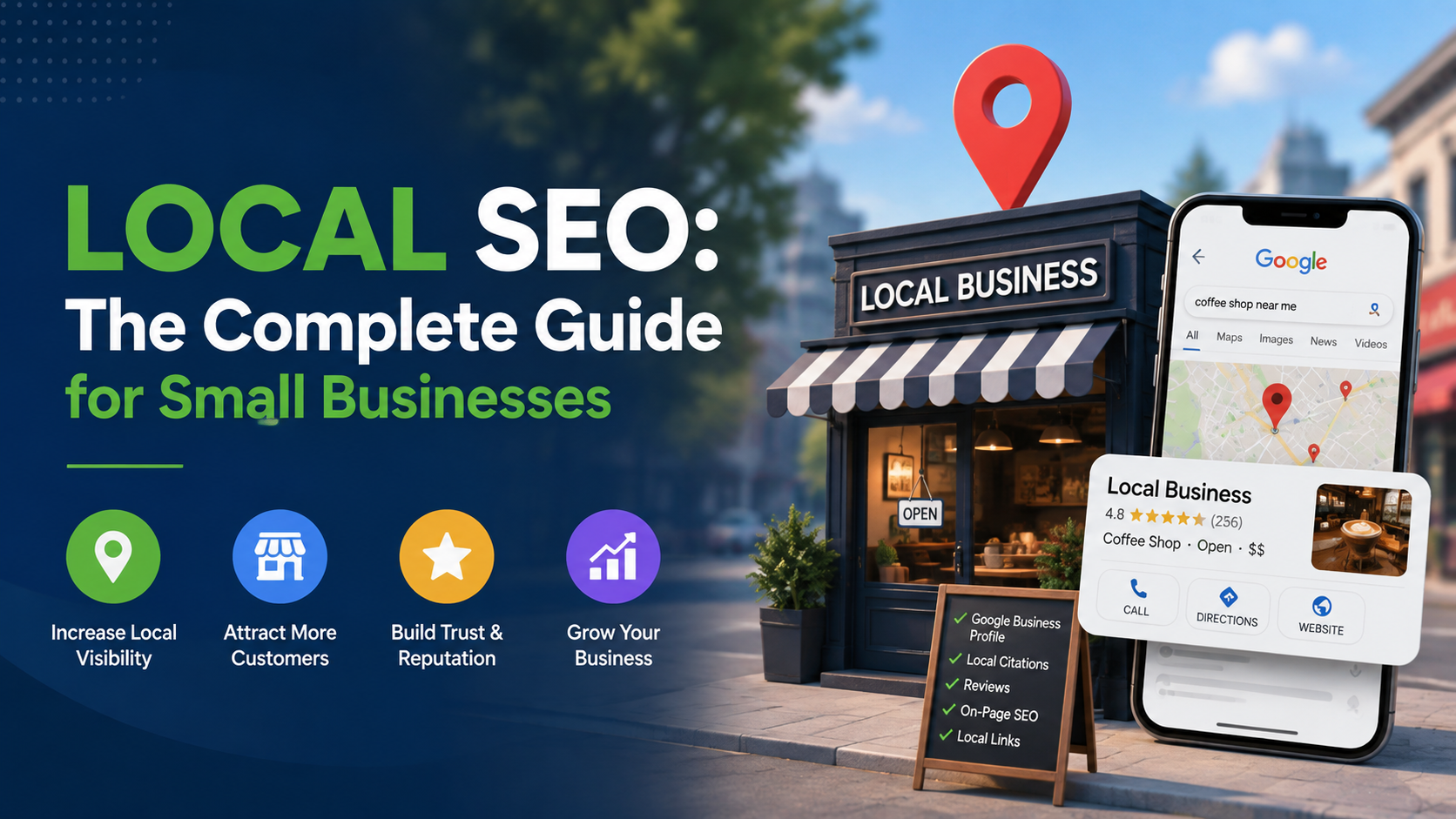
Piece 1: Your Google Business Profile
If local SEO were a house, the Google Business Profile would be the foundation. It is free, it powers the map pack, and in my experience it produces more results than everything else combined for a typical local business.
Getting it right means:
- Claiming and verifying your profile at google.com/business
- Picking the most accurate primary category (this single choice moves rankings more than almost anything)
- Filling every field: services, service area, hours, description, attributes
- Adding real photos regularly, your team, your work, your location
- Posting updates weekly, offers, finished jobs, seasonal reminders
- Answering the Q&A section and turning on messaging if you can handle replies
A warning that saves headaches: keep your information honest. Do not stuff extra keywords into your business name, do not list a fake address, do not create profiles for locations that do not exist. Google suspends profiles for this constantly, and recovering a suspended profile is a slow, painful process.
I will say this plainly: if you do nothing else from this entire guide, set up and complete your profile. It is the highest return hour a local business owner can spend on marketing.
Piece 2: Reviews
Reviews do two jobs at once. They convince Google you are prominent, and they convince humans you are safe to call. A shop with 300 recent reviews sitting next to a shop with 12 old ones is not a fair fight, no matter who is better with a wrench.
What a working review system looks like:
- Ask every happy customer, the same day, by text, with your direct review link
- Make asking a standard step in finishing a job, not a thing you do when you remember
- Reply to every review, good and bad, briefly and politely
- Never buy reviews, never review yourself, never ask only your family
The reply part matters more than people think. Replies show Google an active business, and they show potential customers how you treat people. A calm, professional reply to an unfair one star review has probably won more customers than most five star reviews, because everyone reads the angry one first.
Steady beats sudden. One or two reviews a week, forever, looks natural and keeps working. Forty reviews in one weekend looks exactly like what it is.
Piece 3: Your Website
The map pack runs on your profile, but the regular results run on your website, and the two support each other. A website tuned for local search tells Google, on every important page, three simple things: what you do, where you do it, and why you can be trusted.
The local essentials:
- A separate page for each main service, not one page listing everything
- Your city and area named naturally in page titles, headings, and text
- Name, address, and phone number visible on every page, matching your profile exactly
- Real photos and reviews on the site, not stock images
- Fast loading on phones, since most local searches happen on phones
- If you serve several towns, a genuinely useful page for each one, written for that place, never copy-pasted with the city name swapped
That last one deserves its own warning. Lazy city pages, same text, different town name, are one of the most common local SEO mistakes and Google has gotten very good at ignoring them.
Piece 4: Citations and Consistency
A citation is any place online that lists your business name, address, and phone number: Yelp, Facebook, Apple Maps, Bing Places, industry directories, the chamber of commerce.
Two things matter here:
Being listed in the major places and the directories that matter in your industry. A modest one time effort.
Being consistent everywhere. If your profile says “Smith Auto Repair LLC” at “12 Main Street” and Yelp says “Smith’s Garage” at “12 Main St Suite B” with an old phone number, Google sees conflicting stories, and conflicting stories quietly erode trust in your listing.
My mechanic friend had three different phone numbers floating around the internet from over the years. Cleaning that up is boring work, an afternoon of logging into old directories, but it is one of those fixes you do once and benefit from for years.
Piece 5: Local Links and Real World Presence
The last lever is the widest one: making your business visible in your community in ways that leave traces online. Sponsor the little league team, and the league’s website links to yours. Join the chamber of commerce, get listed. Give a local news site a useful comment about winter car care, get mentioned.
These links and mentions feed prominence. You do not need many. A handful of genuine local links often beats hundreds of junk links, and junk links are worse than none, so never buy the “500 backlinks for $50” packages that will find their way to your inbox.
Your First 90 Days, In Order
Here is how I would sequence all of this, starting from zero:
- Weeks 1 and 2: Claim and completely fill your Google Business Profile. Photos, categories, services, everything.
- Weeks 3 and 4: Set up your review system, send the ask to recent happy customers, and start the every-job habit.
- Month 2: Fix your website basics. Service pages, city mentions, matching contact info, mobile speed. Clean up your citations the same month.
- Month 3: Keep posting weekly, keep collecting reviews, and pick up one or two genuine local links. Check your progress in the profile dashboard: search views, calls, direction requests.
Then hold the routine: weekly posts, steady reviews, occasional photos. Local SEO is a garden, not a project. Regular light care wins.
How Long It Takes and What It Costs
Expect the first visible movement around six to twelve weeks, and meaningful results at three to six months. Competitive niches in bigger cities take longer, quiet towns move faster. Anyone promising the top of the map in two weeks is either lying or doing something that risks a suspension.
Cost wise, everything in this guide can be done for close to zero if you spend the time yourself. Hiring help makes sense when your time is worth more on the job than at the keyboard, but learn the basics first anyway. Owners who understand this stuff hire far better and get burned far less.
The Mistakes That Sink Local Businesses
Setting up the profile once and abandoning it. Google notices activity. A profile untouched since 2023 tells its own story.
Chasing rankings while ignoring reviews. Even a number one spot loses to the competitor below it who has triple the reviews.
Keyword stuffing the business name. “Smith Auto Repair Best Cheap Brakes Oil Change” might work for a month, then the suspension email arrives.
Copy-paste city pages. Ten identical pages with swapped town names impress no one, especially not Google.
Giving up at week six. The quiet stretch before results is where most owners quit. The map pack is full of people who did not.
Where This Leaves You
My mechanic friend still thinks Google is a little rigged, but now he says it with a grin, because it is rigged in his favor. Not by money. By two hundred photos, a review habit, one honest profile, and a website that finally says what he does and where.
Every piece of that is sitting available to you today, free, waiting for a few focused evenings. Start with the profile this week. The rest of this guide will still be here when you are ready for the next piece.